
A cloud of controversy has formed around a recent pre‑bid meeting conducted by Sri Lanka’s Excise Department, with officials, industry observers, and governance advocates raising serious questions about transparency, procurement integrity, and possible undue influence on the tender process.
Unusual Attendance Raises Red Flags
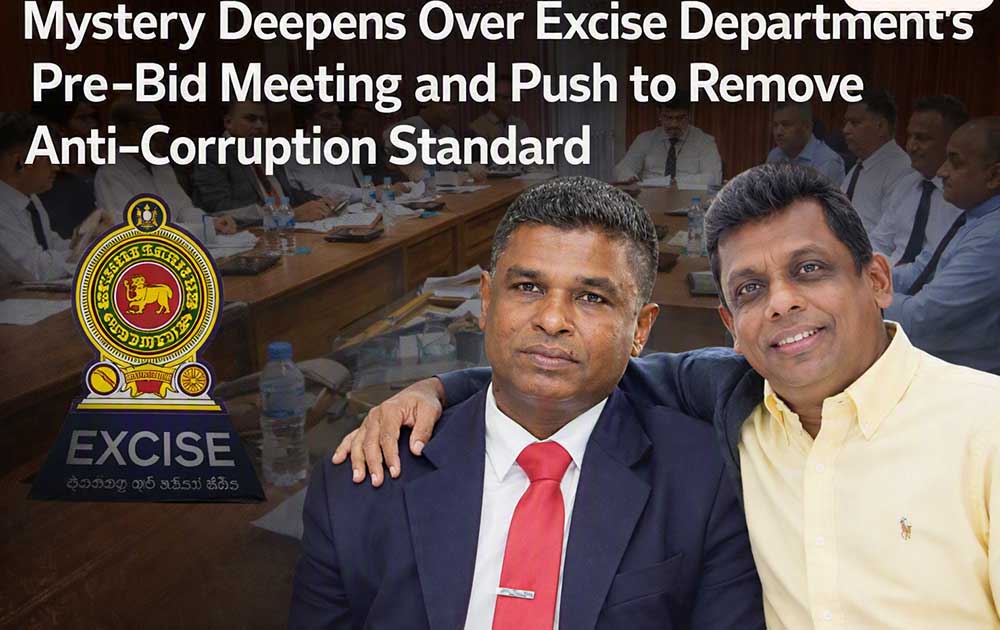
The pre‑bid meeting held on the 4th drew an unexpectedly large crowd — more than 30 attendees — despite official records showing that only three companies had purchased the bid documents. Procurement experts say such a mismatch is highly irregular and suggests that individuals without formal eligibility may have been allowed to participate.
The situation escalated further the following day when the Commissioner General reportedly organized a field visit to Lion Brewery and IDL. According to departmental insiders, several individuals who attended the pre‑bid meeting were permitted to join the taxpayer‑funded field trip without any identity verification. Critics argue that this constitutes a misuse of public funds and undermines the integrity of the tender process.
ISO 37001 Requirement Under Pressure
The government’s tender specifications include stringent qualification criteria, notably the requirement for ISO 37001, the internationally recognized standard for Anti‑Bribery and Anti‑Corruption Management Systems. Governance advocates have praised this inclusion, noting that it reflects a commitment to ensuring that suppliers meet global standards for ethical conduct.

However, internal sources within the Excise Department claim that Mr. Premalal and Mr. Premaratna of the Excise Consultative Group (ECG) are pressuring the Technical Evaluation Committee (TEC) to remove or dilute this requirement. Proposals reportedly being pushed include:
Downgrading ISO 37001 from a mandatory eligibility criterion
Allowing companies additional time to obtain the certification
Awarding extra marks instead of requiring compliance
Officials allege that the lobbying is driven by the fact that the current supplier, MSP, does not possess ISO 37001 certification. Removing the requirement would allow MSP — and other companies lacking anti‑corruption safeguards — to remain eligible for the tender.
ISO 37001 is the international standard for establishing, implementing, maintaining and continually improving an anti bribery management system. It provides a structured and globally recognized framework that helps organizations prevent, detect and respond to bribery in a consistent and proportionate way.
Concerns Over Influence and Governance
Sources claim that MSP is influencing ECG members and Minister Premalal to pressure the TEC into altering the specifications. If successful, governance experts warn that this would weaken anti‑corruption safeguards and open the door for suppliers with questionable backgrounds to participate.
Transparency advocates argue that ISO 37001 is not merely a technical requirement but a critical safeguard in a sector historically vulnerable to corruption risks.
Appeal to President Anura Kumara Dissanayake
In light of these developments, civil society voices and procurement watchdogs are urging President Anura Kumara Dissanayake to intervene and ensure that the tender specifications remain unchanged.
They argue that:
Removing ISO 37001 would undermine the government’s stated commitment to clean governance
Weakening anti‑corruption standards would damage public trust
Maintaining strict criteria is essential for long‑term institutional reform
Advocates emphasize that Sri Lanka’s future depends on strengthening — not weakening — systems designed to prevent corruption.
A Test of Transparency
The unfolding situation at the Excise Department is increasingly seen as a test of the administration’s commitment to good governance. Whether the ISO 37001 requirement remains intact may signal the direction of future procurement reforms and the seriousness of the government’s anti‑corruption agenda.
About the Author