
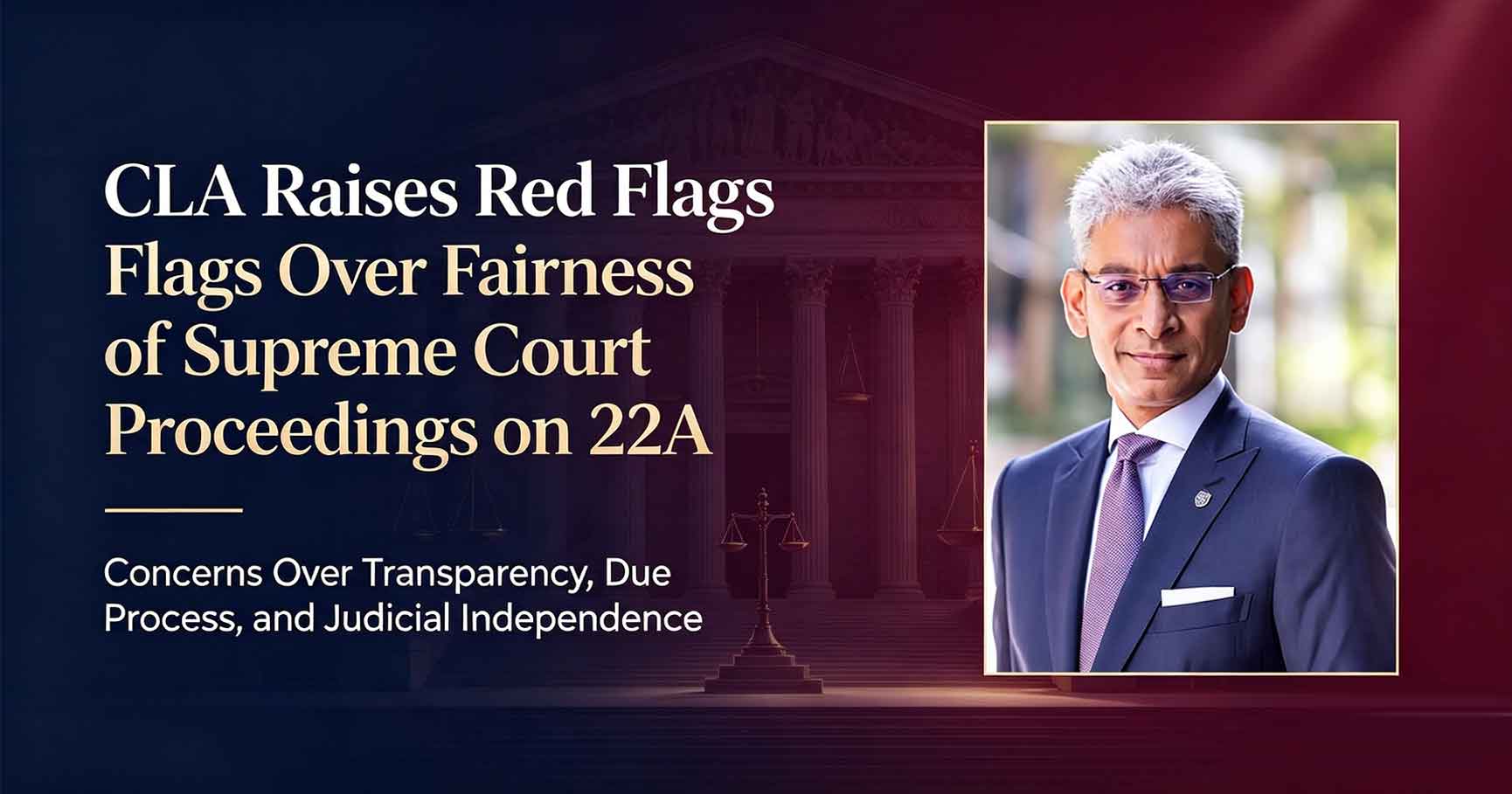
Colombo — Commonwealth Lawyers Association (CLA) President Steven Thiru has raised a series of concerns over procedural fairness, transparency and public confidence arising from the Supreme Court proceedings on petitions challenging Sri Lanka’s proposed 22nd Amendment to the Constitution.
In a report dated September 7 following his visit to Sri Lanka, Thiru said he observed the second day of hearings on September 2 at the invitation of the Bar Association of Sri Lanka (BASL). The CLA’s involvement, he noted, stemmed from its mandate to uphold judicial independence and the rule of law.
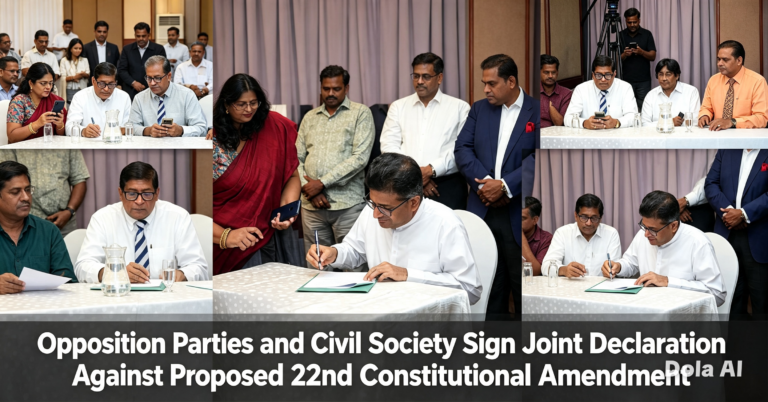
A total of 67 petitions, including one by the BASL, were filed against the proposed amendment, while 27 interveners opposed the challenges. The matters were heard before a five‑judge bench headed by Chief Justice Preethi Padman Surasena.
Recusal Motion and Full Bench Request Dismissed
The BASL had sought the recusal of the Chief Justice and requested that the matter be heard by a full bench of all 17 Supreme Court judges. Both motions were dismissed on September 1. Thiru said he was informed that the bench provided no reasons beyond stating that it had jurisdiction to hear the case.
Petitioners had argued that the Chief Justice could be a potential beneficiary of the proposed amendment, raising a possible conflict of interest. Thiru emphasised that his observations did not imply actual bias or that recusal was necessarily warranted, but said clear reasoning was essential to avoid perceptions of partiality.
Concerns Over Bench Composition
The CLA President also questioned the decision not to constitute a full bench, noting that the absence of publicly stated reasons could undermine public confidence in the empanelling process.
The report highlighted that several of the Supreme Court’s most senior judges were not included in the five-member bench. Specifically, the four judges immediately senior to Justice Achala Wengappuli — Justices Yasantha Kodagoda, A.H.M.D. Nawaz, Shiran Gooneratne and Janak De Silva — were not part of the panel.
Thiru clarified that this did not, on its own, render the bench unlawful, but said the lack of transparency warranted scrutiny.
Denial of Oral Replies Called “Unusual”
Another issue raised was the court’s refusal to allow petitioners to make oral submissions in reply after arguments by interveners and the Attorney General. Petitioners were instead directed to file written replies.
Thiru described the denial of oral replies as “unusual”, noting that the court had heard arguments until 10:45 p.m. on the first day and could have accommodated replies after proceedings ended at 5:30 p.m. on the second day.
The BASL later informed the court that it would not submit written submissions, citing among other reasons the refusal to permit oral replies.
Meetings on Judicial Independence
During his visit, Thiru sought meetings with Justice Minister Harshana Nanayakkara and Opposition Leader Sajith Premadasa to discuss judicial independence. He was unable to meet the Justice Minister but met Premadasa, with discussions focusing on maintaining public confidence in judicial impartiality.
Call for Scrutiny
Concluding his report, Thiru stressed that his observations did not constitute a view on the merits of the petitions or the constitutional issues before the Supreme Court. However, he said the procedural concerns identified required “careful scrutiny” in the interests of fairness, transparency and public confidence in the administration of justice.
Report on the Visit of the President of the Commonwealth Lawyers Association,Steven Thiru, to Sri Lanka to Observe Proceedings Challenging the Constitutionality of the Proposed 22nd Amendment to the Constitution of Sri Lanka and to Meet with Concerned Parties
About the Author