
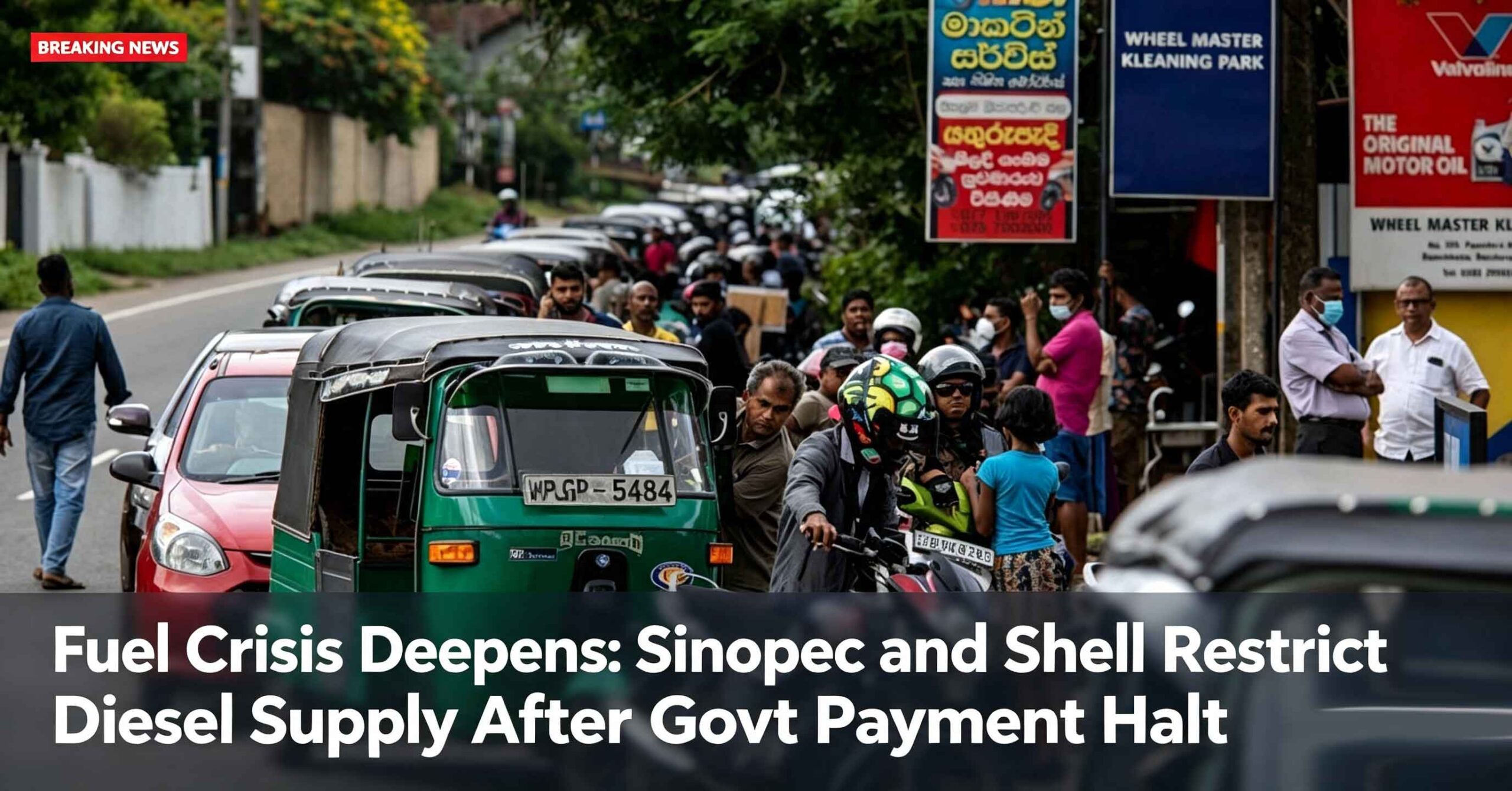
A developing fuel shortage is spreading across Sri Lanka, with multiple regions already experiencing diesel scarcity. According to political reporting, the shortage has intensified particularly at fuel stations operated by foreign companies, while CPC outlets remain comparatively stable.
Foreign Suppliers Cut Distribution After Government Halts Compensation
In recent months, global crude oil price hikes pushed foreign fuel suppliers to request a domestic price increase. The government declined, opting instead to compensate these companies with Rs. 100 per litre of diesel to offset losses.
However, the sudden suspension of this payment scheme has triggered a sharp reduction in fuel distribution by foreign operators, including Sinopec and Shell.
600 Fuel Stations Affected Across the Country
Foreign companies collectively operate around 600 fuel stations in Sri Lanka. To protect their brand reputation, they have continued supplying fuel only to stations in and around Colombo.
Fuel stations outside Colombo—particularly those dependent on foreign suppliers—have already begun running out of diesel. Once existing stocks are exhausted, these stations will be unable to serve customers, potentially causing severe disruptions to transport, agriculture, fisheries, and emergency services in affected regions.
Industry Structure
Sri Lanka’s petroleum distribution network consists of four companies, three of which are foreign-owned:
- Ceylon Petroleum Corporation (CPC)
- Sinopec Energy Lanka (Pvt) Ltd
- RM Parks (Pvt) Ltd
- Lanka Indian Oil Company (IOC)
With foreign suppliers limiting distribution, pressure is mounting on CPC to meet nationwide demand—raising concerns about possible long queues, rationing, and further economic strain.
About the Author