
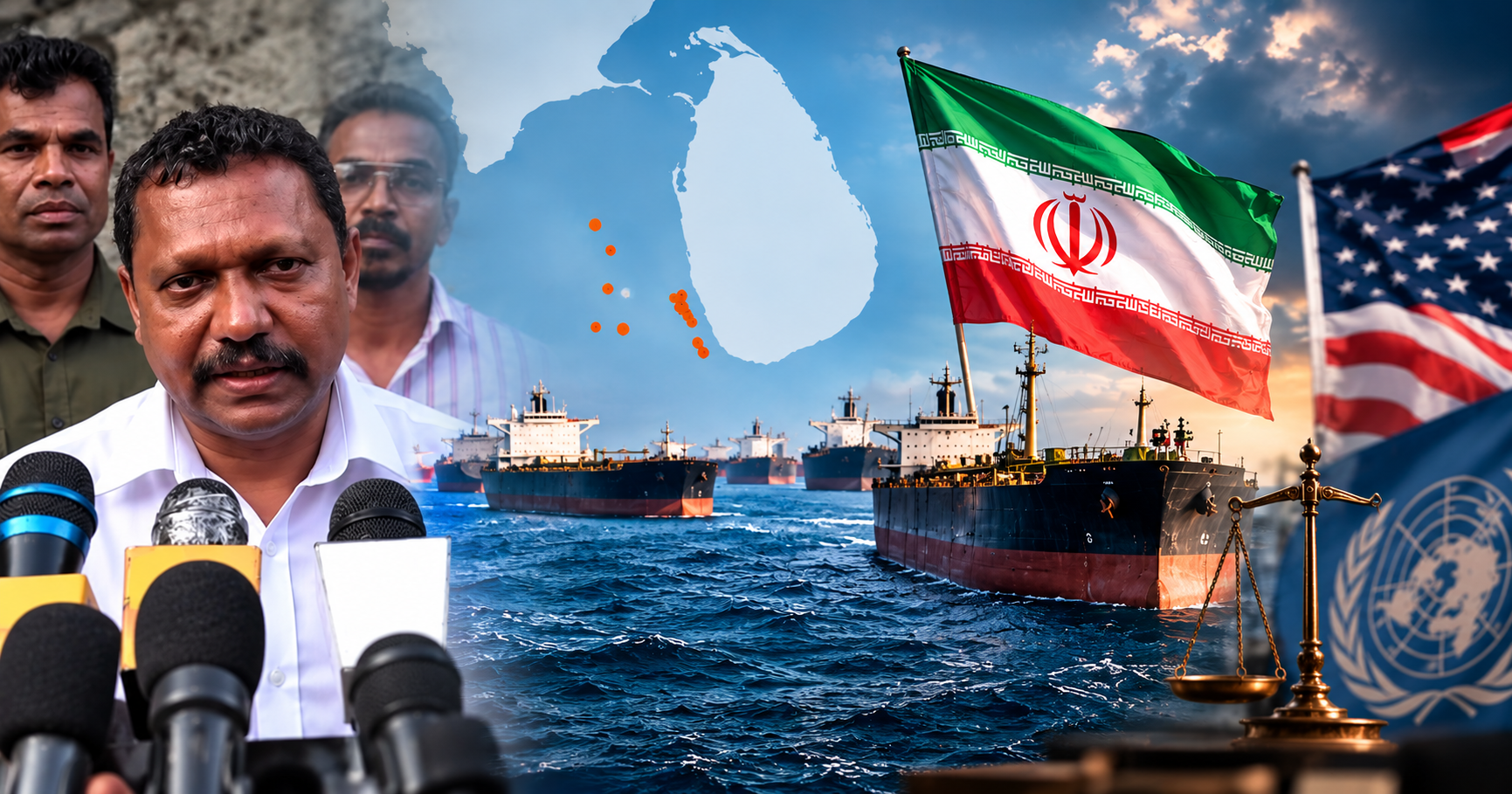
ACSA, SOFA, American secondary sanctions, IMF dependence and the struggle for influence in the Indian Ocean raise difficult questions about Colombo’s independence in foreign policy.
October 24, 2026 | Special Geopolitical Analysis
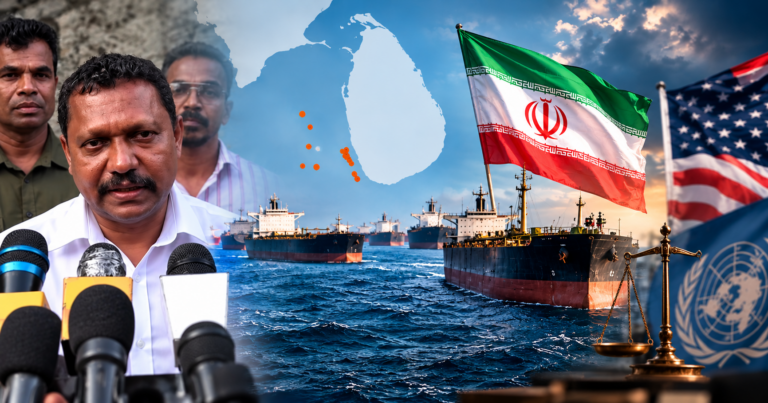
COLOMBO — Sri Lanka’s handling of Iranian vessels operating in international waters near its southern coast has emerged as a significant test of the country’s foreign policy independence, raising questions about its humanitarian obligations, defence cooperation with the United States, exposure to American economic sanctions and strategic position in the Indian Ocean.
The controversy intensified following remarks made on October 24 by Deputy Minister of Health Dr. Hansaka Wijemuni concerning a group of people who had arrived at Galle Harbour from an Iranian vessel.
According to the Deputy Minister, Sri Lanka acts in accordance with international laws and conventions when dealing with people arriving by sea, regardless of their nationality.
Their country of origin or nationality, he indicated, should not determine the humanitarian treatment they receive.
However, his remarks have drawn renewed attention to the government’s earlier position on Iranian vessels reportedly stranded in international waters near Sri Lanka.
On October 9, the Foreign Ministry indicated that Sri Lanka would prioritise its national interests before considering assistance to Iranian vessels, while acknowledging that maritime supply companies were conscious of possible US secondary sanctions.
The two positions are not necessarily legally contradictory. Nevertheless, they raise a fundamental question about the principles governing Colombo’s decisions.
Is Sri Lanka applying a consistent humanitarian policy, or are its decisions being shaped by the economic and diplomatic consequences of challenging American sanctions?
October 9 Versus October 24: Two Positions, One Foreign Policy Dilemma
During the first half of October, Foreign Minister Vijitha Herath reportedly stated that approximately 47 vessels were present in international waters near Sri Lanka, including around 19 Iranian vessels.
These ships were reportedly located outside Sri Lanka’s territorial waters.
The situation became particularly sensitive amid reports that Iranian vessels were experiencing shortages of food, drinking water and fuel.
On October 9, a Foreign Ministry spokesperson said Sri Lanka would place its national interests first when considering assistance.
The spokesperson also acknowledged the concerns of maritime supply companies about potential US secondary sanctions.
Importantly, the government reportedly stated that Washington had not directly threatened Sri Lanka with sanctions for providing assistance.
This distinction matters.
There is a significant difference between a government acting in response to a direct American demand and one independently calculating the economic consequences of potentially violating US sanctions.
On October 24, however, Deputy Minister Wijemuni emphasised Sri Lanka’s obligations under international law and conventions, irrespective of nationality.
The government’s statements may refer to two legally different situations: providing emergency humanitarian assistance to individuals and supplying commercial or operational services to vessels.
The critical question is whether the assistance provided on October 24 was limited to humanitarian protection or extended to port services, fuel, logistical support or other facilities that could benefit Iranian maritime operations.
Without identifying the vessel involved, its legal status and the assistance actually provided, it is impossible to establish whether Colombo has changed its policy or merely applied different rules to different circumstances.
ACSA: Does Sri Lanka’s Defence Agreement With Washington Restrict Assistance to Iran?
One of the central questions concerns the Acquisition and Cross-Servicing Agreement (ACSA) between Sri Lanka and the United States.
ACSA is a defence logistics arrangement designed to facilitate the exchange of supplies and services between the armed forces of participating countries.
Such arrangements can cover fuel, transportation, food, maintenance and other logistical requirements.
Sri Lanka and the United States signed an ACSA agreement in 2007 and renewed the arrangement in 2017.
The agreement has generated considerable political controversy in Sri Lanka, particularly over concerns about foreign military access and the country’s strategic independence.
However, ACSA does not, by itself, make Sri Lanka a member of an American military alliance.
Nor is there established evidence that the agreement categorically prohibits Sri Lanka from providing humanitarian assistance to Iranian nationals or vessels.
The distinction between defence cooperation and military alignment is crucial.
Sri Lanka can maintain logistical cooperation with American forces without automatically assuming every aspect of Washington’s foreign policy towards Iran.
Nevertheless, practical complications may arise when Sri Lankan ports and maritime infrastructure are used by countries with competing strategic interests.
For example, the provision of emergency medical treatment to Iranian sailors is fundamentally different from supplying fuel or maintenance services that could enable an Iranian military vessel to continue operational activities.
During an armed conflict, the latter could raise questions concerning neutrality and the treatment of belligerent warships.
Consequently, the legal significance of assistance depends not simply on the nationality of the vessel but on its classification, circumstances and the nature of the support provided.
SOFA and the Question of Sri Lankan Sovereignty
Another frequently debated issue is the Status of Forces Agreement, commonly known as SOFA.
A SOFA generally establishes the legal status, privileges and responsibilities of foreign military personnel operating within another country’s territory.
Sri Lanka and the United States have previously discussed arrangements concerning American military personnel, including controversial proposals for expanded provisions.
However, the later, broader SOFA proposal that attracted public controversy has not been established as a binding agreement currently governing the Iranian vessel situation.
It would therefore be misleading to suggest that Sri Lanka is automatically prohibited from assisting Iran because of an expanded SOFA arrangement.
The more relevant issue is the practical extent of Sri Lanka’s existing defence relationship with Washington.
American naval visits, military training programmes, maritime security cooperation and logistics arrangements have contributed to an increasingly important bilateral security relationship.
These activities do not necessarily remove Sri Lanka’s legal freedom to make independent decisions.
But they create a diplomatic environment in which decisions affecting American strategic interests may carry consequences beyond their immediate humanitarian significance.
US Secondary Sanctions: The More Immediate Threat
The most substantial pressure may come not from ACSA or SOFA but from the American sanctions system.
The United States maintains extensive sanctions targeting Iran, including restrictions affecting designated individuals, shipping companies, vessels, financial institutions and petroleum-related transactions.
These measures are administered primarily through the US Treasury Department’s Office of Foreign Assets Control (OFAC).
Some sanctions can also affect non-American companies engaging in certain transactions with sanctioned Iranian entities.
These are commonly described as secondary sanctions.
For Sri Lanka, the potential consequences are significant.
Port operators, shipping agents, fuel suppliers, banks, insurers and other commercial service providers may be reluctant to engage with sanctioned vessels because of the possibility of losing access to American financial or commercial systems.
The consequences may extend beyond the immediate value of any transaction.
A Sri Lankan company supplying services to a designated Iranian vessel could face enhanced compliance scrutiny, banking restrictions or other consequences depending on the applicable sanctions rules.
However, not every transaction involving an Iranian vessel automatically constitutes a sanctions violation.
The specific vessel, ownership structure, transaction, applicable sanctions provisions and available humanitarian authorisations must all be examined.
This is particularly important when distinguishing emergency assistance to people from commercial support for sanctioned maritime activities.
Humanitarian Assistance Is Not the Same as Commercial Resupply
International maritime law recognises obligations concerning people in distress at sea.
Article 98 of the United Nations Convention on the Law of the Sea (UNCLOS) addresses duties relating to assistance to persons in danger of being lost at sea and the promotion of adequate search-and-rescue services.
Other maritime instruments, including relevant search-and-rescue and safety conventions, may also apply.
Nevertheless, international law does not automatically require Sri Lanka to provide every form of commercial supply requested by every foreign vessel.
A vessel carrying sailors facing an immediate threat to life presents a different legal situation from a vessel requesting fuel to continue its commercial voyage or military deployment.
The relevant considerations include whether human lives are in immediate danger, whether rescue or medical evacuation is necessary, whether the vessel is civilian or military, and whether the proposed assistance would contribute to an ongoing military operation.
Food, drinking water and urgent medical care may raise compelling humanitarian considerations.
Fuel, repairs and operational logistical support require a more detailed legal assessment.
This distinction could explain why the government adopted a cautious approach towards supplying Iranian vessels on October 9 while emphasising humanitarian obligations on October 24.
But that explanation remains incomplete without official disclosure of what actually occurred.
Sri Lanka’s Trade Dependence on the United States
The geopolitical dilemma is intensified by Sri Lanka’s economic dependence on international trade.
According to the trade figures cited in the reporting underlying this analysis, Sri Lanka exported approximately US$2.999 billion in goods to the United States in 2025, representing roughly 24 percent of total merchandise exports.
The American market is particularly important to Sri Lanka’s apparel and textile industries, which provide employment and foreign exchange earnings.
Consequently, Colombo has a strong incentive to avoid actions that might jeopardise its commercial relationship with Washington.
However, it is necessary to distinguish between several different risks.
US secondary sanctions against a particular company or financial institution do not automatically mean that all Sri Lankan exports to the United States would be prohibited.
A wider deterioration in bilateral relations could create additional commercial uncertainty, but such an outcome should not be treated as inevitable.
The immediate concern is that Sri Lankan companies may avoid otherwise permissible transactions because of compliance costs, uncertainty and the perceived consequences of dealing with sanctioned Iranian entities.
This phenomenon can produce a powerful chilling effect even without direct American diplomatic pressure.
The IMF Factor: Financial Dependence and Diplomatic Calculations
Sri Lanka’s ongoing engagement with the International Monetary Fund adds another dimension to the controversy.
Following its economic collapse and sovereign debt crisis, Sri Lanka entered an IMF-supported reform programme intended to restore macroeconomic stability, improve public finances and rebuild international confidence.
The United States is the IMF’s largest shareholder and exercises substantial influence within the institution’s governance structure.
This gives Washington an important position in the international financial system.
However, it would be inaccurate to claim that the United States can automatically suspend Sri Lanka’s IMF programme simply because Colombo provides humanitarian assistance to Iranian nationals.
IMF disbursements are governed by programme conditions, institutional procedures and decisions taken through the Fund’s governing bodies.
There is no established evidence that Sri Lanka’s decisions concerning Iranian vessels have directly affected its IMF financing.
Nevertheless, the broader diplomatic environment remains relevant.
For an economically vulnerable country dependent on international financing, access to foreign markets, investor confidence and relationships with major financial powers all influence strategic calculations.
The IMF factor should therefore be understood as part of Sri Lanka’s wider economic vulnerability rather than proof of a direct American financial threat over the Iranian vessels.
The Indian Ocean: A Strategic Contest Beyond Iran and America
Sri Lanka’s geographical position makes the controversy particularly important.
Located near major maritime routes connecting the Middle East, Africa, South Asia and East Asia, Sri Lanka occupies a strategically valuable position in the Indian Ocean.
Its ports and maritime infrastructure are relevant to the security and commercial interests of several major powers.
The United States seeks to maintain maritime security partnerships and strategic access across the Indo-Pacific.
India regards the waters surrounding Sri Lanka as an important part of its immediate security environment.
China has developed significant commercial and infrastructure interests in Sri Lanka, including port-related investments.
Iran, meanwhile, has strategic interests in maintaining maritime connectivity and protecting its commercial and naval activities.
These overlapping interests place Colombo in a difficult position.
A decision that appears to be a routine humanitarian or port-management matter can acquire geopolitical significance when it involves vessels connected to a country engaged in confrontation with the United States.
Sri Lanka must therefore consider not only the immediate needs of sailors and shipping operators but also its relationships with Washington, New Delhi, Beijing and Tehran.
The challenge is to preserve freedom of action without unnecessarily escalating tensions with any of these powers.
Neutrality During Armed Conflict
The reported confrontation involving the United States and Iran also raises questions about neutrality.
Under international law, neutral states have particular obligations when dealing with belligerent military forces.
These rules are especially relevant to the use of neutral ports, territorial waters and facilities by foreign warships.
Humanitarian assistance to injured or endangered individuals does not necessarily amount to participation in a conflict.
However, supplying military vessels with operational support may require careful examination under the applicable law of neutrality.
The classification of the Iranian vessels is therefore essential.
An Iranian-flagged commercial tanker, a sanctioned oil carrier and an Iranian naval vessel do not necessarily have the same legal status.
Nor should all 19 reported Iranian vessels be treated as a single legal category without examining their individual circumstances.
The government must establish whether the vessels concerned were commercial, military or otherwise designated, and whether the assistance provided was humanitarian, commercial or operational.
Has Washington Pressured Colombo?
One of the most politically sensitive questions is whether the United States has exerted direct pressure on Sri Lanka to prevent assistance to Iranian vessels.
Reports have suggested that American officials sought to discourage maritime service providers from supplying Iranian ships.
However, the Sri Lankan Foreign Ministry reportedly stated that Washington had not directly communicated a sanctions threat to the government over such assistance.
These accounts should not be treated as conclusive proof of either direct coercion or the complete absence of diplomatic influence.
Economic sanctions can influence the conduct of governments and private companies without requiring an explicit instruction from an embassy or foreign government.
For example, a Sri Lankan shipping company may decline to provide services because its bank, insurer or international commercial partners consider the transaction too risky.
That decision may reflect the international reach of the American sanctions system rather than a direct order issued to Colombo.
The central investigative question is therefore not simply whether Washington instructed Sri Lanka to refuse assistance, but how extensively the possibility of American sanctions influenced the decisions of Sri Lankan authorities and private service providers.
Six Questions the Government Must Answer
A comprehensive parliamentary explanation would help establish whether the government has followed a consistent legal and foreign policy framework.
1. Which Iranian vessel was involved on October 24?
The government should identify the vessel, its flag registration, ownership, classification and legal status.
2. What assistance was actually provided?
Authorities should clarify whether the individuals received medical treatment, immigration facilities, temporary protection, food, water, accommodation or other services, and whether the vessel itself received logistical support.
3. Was the vessel subject to American sanctions?
Officials should disclose whether the vessel, its owners or relevant operators appeared on applicable sanctions lists and whether a formal compliance assessment was conducted.
4. Was there communication with Washington?
The government should clarify whether the US Embassy, American authorities or other foreign representatives communicated concerns, requests or warnings relating to the vessels.
5. Were ACSA and other defence arrangements examined?
The public deserves to know whether the Attorney General’s Department, Foreign Ministry or relevant defence authorities assessed the implications of existing agreements.
6. How is Sri Lanka protecting its neutrality?
Authorities should explain the criteria used to distinguish humanitarian assistance from operational support and how those criteria are applied consistently to vessels associated with different countries.
The Larger Question: How Independent Is Sri Lanka’s Foreign Policy?
The Iranian vessel controversy goes beyond the immediate question of whether Colombo should provide assistance to ships operating near its coastline.
It exposes a structural challenge facing economically vulnerable countries located in strategically important regions.
Sri Lanka has sovereign authority to formulate its foreign policy and make decisions consistent with international law.
Yet that authority operates within an international system in which major powers possess considerable economic, financial and military influence.
The United States does not need to exercise direct control over Sri Lankan ports to influence commercial decisions involving sanctioned vessels.
The international banking system, shipping insurance arrangements, trade relationships and sanctions-compliance mechanisms can themselves shape what governments and businesses consider economically feasible.
At the same time, Sri Lanka cannot disregard genuine maritime humanitarian obligations simply because the people requiring assistance belong to a country facing American sanctions.
The government must also ensure that humanitarian assistance is not used as a justification for military or commercial support that would violate applicable legal obligations.
This is the difficult balance Colombo must maintain.
Conclusion: International Law or American Sanctions?
The statements made on October 9 and October 24 do not, on their own, establish that Sri Lanka has violated international law, breached its defence agreements with Washington or surrendered its foreign policy independence.
Nor do they establish that the government has acted consistently.
What they demonstrate is the need for greater transparency about how Colombo distinguishes humanitarian responsibilities from commercial and strategic considerations.
If the government declined assistance to Iranian vessels because of a genuine sanctions risk, it should explain the legal basis for that assessment.
If it subsequently provided assistance because human lives were at risk, it should identify the applicable humanitarian obligations and the scope of the assistance.
And if commercial, diplomatic or security considerations influenced either decision, those considerations should be acknowledged rather than obscured by general references to national interests.
The real geopolitical issue is not whether Sri Lanka has already submitted to American pressure. It is whether the fear of American economic consequences is limiting Colombo’s ability to make independent, transparent and legally defensible decisions.
For a country that repeatedly emphasises sovereignty, neutrality and an independent foreign policy, the Iranian vessel controversy presents an important opportunity to demonstrate how those principles operate in practice.
Sri Lanka’s credibility will ultimately depend not on whether it chooses Washington or Tehran, but on whether it applies international law consistently, protects human life, preserves its legitimate national interests and explains its decisions openly to the public.
About the Author