
COLOMBO, Sri Lanka – October 18, 2026
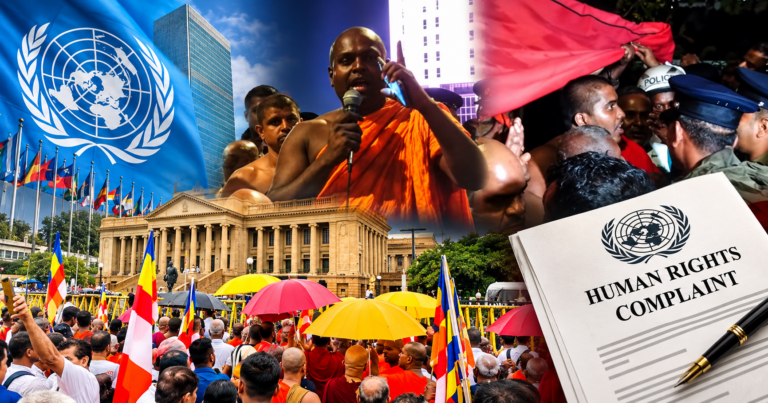
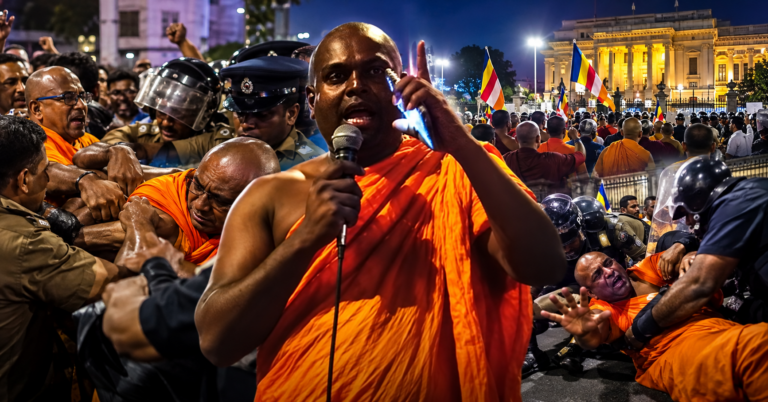
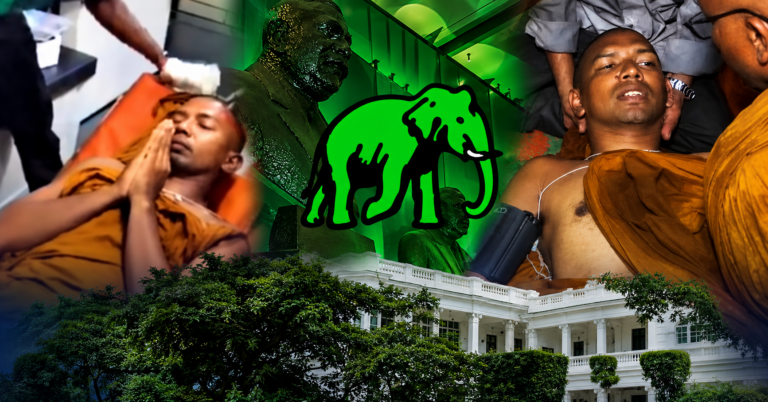
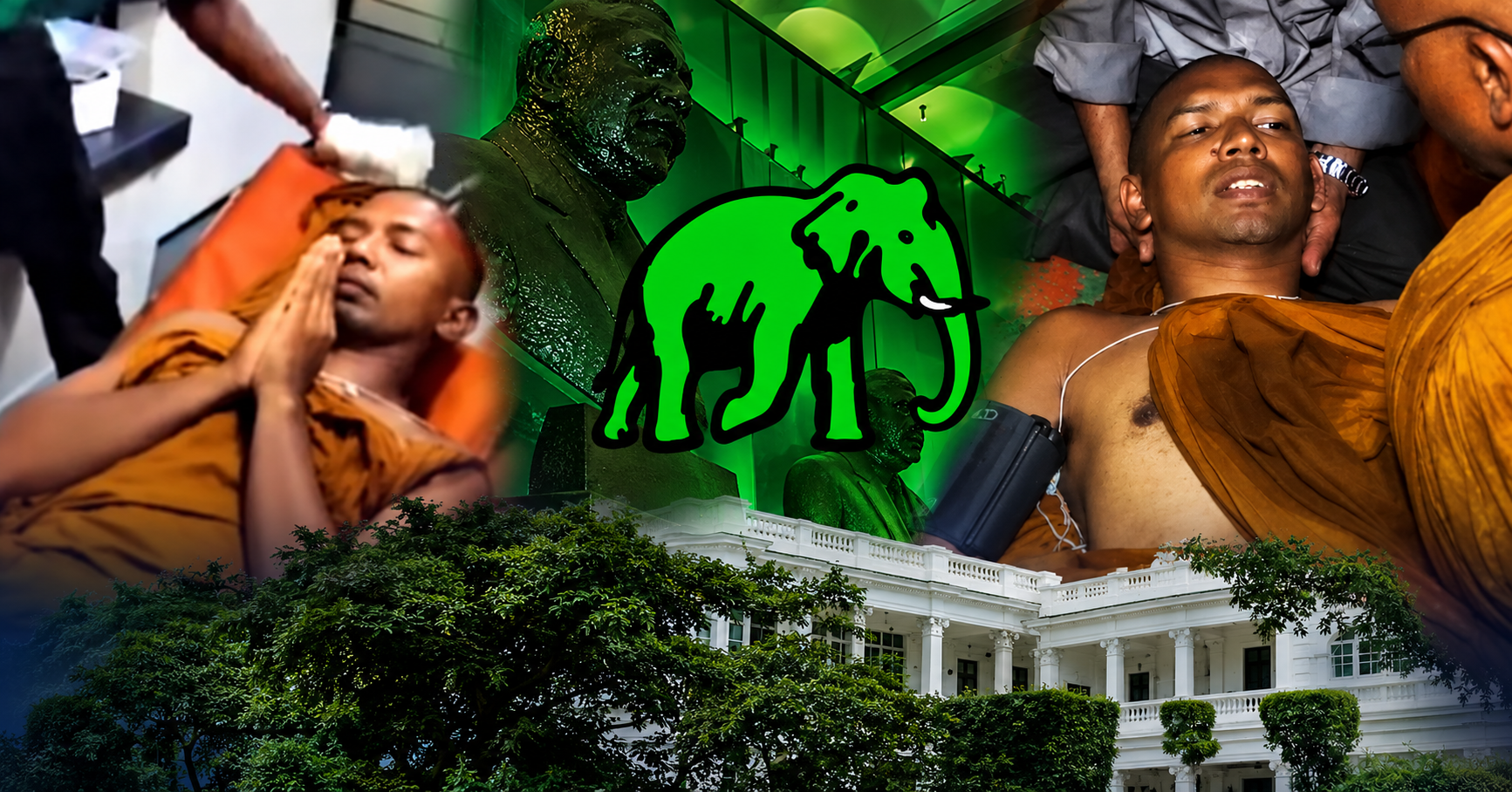
Sri Lanka’s United National Party (UNP) has strongly condemned the alleged assault on Ven. Balangoda Kassapa Thero, who was participating in a peaceful satyagraha campaign demanding the release of imprisoned Buddhist monk Ven. Galagoda Aththe Gnanasara Thero.
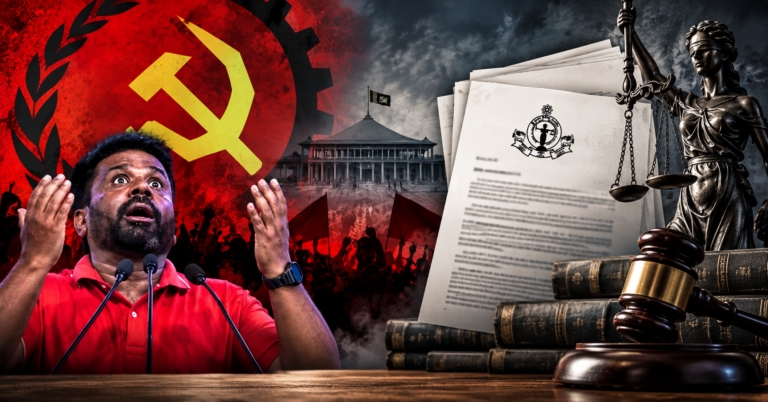
In an official statement issued on Sunday, October 18, the UNP described the reported attack as a “barbaric act” and accused the National People’s Power (NPP) government of pursuing policies detrimental to Buddhism and the Buddhist monastic community.
The opposition party also raised serious legal and constitutional concerns regarding the removal of Gnanasara Thero’s monastic robes during his imprisonment, calling for an immediate investigation into the conduct of prison authorities.
Alleged Assault on Monk Sparks Political Condemnation
According to the UNP, the alleged assault on Ven. Balangoda Kassapa Thero represents another disturbing incident involving Buddhist monks under the present administration.
The party claimed that Buddhist monks defending their religious traditions have increasingly faced harassment, intimidation, and public humiliation.
It warned that the government could face serious political consequences if such incidents continued.
However, the statement did not provide independently verified evidence establishing government involvement in the alleged assault.
Why Was the Kotte Sangha Council Excluded?
The UNP also questioned President Anura Kumara Dissanayake’s decision to hold discussions with representatives of the Malwathu and Asgiriya Buddhist chapters without inviting the Kotte Sri Kalyani Samagri Dharma Maha Sangha Sabha.
Gnanasara Thero belongs to the Kotte chapter, whose Mahanayake is Most Ven. Ittapana Dhammalankara Thero.
The party argued that the relevant monastic authority should have been directly consulted regarding matters affecting Gnanasara Thero’s religious status and monastic discipline.
The UNP questioned whether the exclusion of the Kotte chapter was politically motivated.
“Was the Kotte Sangha Council excluded from the meeting with the President on instructions from Pelawatte?” the party asked, referring to the headquarters of the ruling Janatha Vimukthi Peramuna (JVP).
The statement suggested that excluding the directly concerned monastic authority raised doubts about the government’s willingness to resolve the dispute.
Removal of Buddhist Robes: Alleged Violation of Prison Regulations
One of the most serious allegations raised by the UNP concerns the legal basis for removing Gnanasara Thero’s Buddhist monastic robes following his imprisonment.
The party referred to the Prisons Ordinance No. 16 of 1877 and the regulations governing prison administration in Sri Lanka.
According to the UNP, the removal of the monk’s robes violated applicable prison regulations and Buddhist monastic discipline under the Vinaya Pitaka.
The party further alleged that the action breached Article 9 of Sri Lanka’s Constitution, which accords Buddhism the foremost place and places a duty on the state to protect and foster the Buddha Sasana.
However, whether the removal of robes constitutes a legal or constitutional violation requires examination of the applicable prison regulations, relevant judicial decisions, and the circumstances surrounding the administrative decision.
Article 9 does not, by itself, expressly establish an unconditional right for imprisoned Buddhist monks to wear monastic robes.
UNP Questions Justice Minister Harshana Nanayakkara
The UNP also questioned why the current Minister of Justice, Harshana Nanayakkara, had not taken steps to allow Gnanasara Thero to retain his robes during imprisonment.
The party contrasted the present situation with the approach reportedly adopted by former Prisons Minister and attorney-at-law Thalatha Atukorale, under whose administration Gnanasara Thero was previously permitted to wear his robes while imprisoned.
The UNP demanded an explanation for the apparent difference in administrative treatment.
The controversy has raised broader questions about religious accommodation within Sri Lanka’s prison system and the extent to which prison authorities must consider the religious obligations of ordained Buddhist monks.
Parliamentary Investigation Demanded
The UNP called on the government to investigate prison officials over the alleged violations before sending senior prison administrators to meet Buddhist religious leaders.
The party specifically questioned whether the Commissioner General of Prisons had independently decided to meet the Mahanayake Theros or had acted under external pressure.
It demanded that the circumstances surrounding those meetings be investigated, including through Parliament.
The UNP maintained that accountability for any unlawful administrative action should take priority over attempts to resolve the controversy through discussions with religious authorities.
Religious Freedom and Government Accountability Under Scrutiny
The UNP’s statement adds a new political dimension to the controversy surrounding Gnanasara Thero’s imprisonment and the treatment of Buddhist monks participating in protests.
The dispute now raises several questions requiring clarification: the circumstances of the alleged assault on Ven. Balangoda Kassapa Thero, the legal authority relied upon to remove Gnanasara Thero’s robes, the involvement of the relevant monastic authorities, and whether prison officials acted independently or under political direction.
The party has called for accountability, transparency, and respect for Buddhist religious traditions.
The government’s response to these allegations, particularly the legal justification for the prison authorities’ actions, will be important in determining whether the controversy develops into a broader constitutional and parliamentary dispute.
Source: Official statement issued by the United National Party (UNP), October 18, 2026.
About the Author