
Moody’s Ratings has affirmed Sri Lanka’s Caa1 foreign currency long‑term issuer rating and senior unsecured rating, maintaining a stable outlook as the country continues to navigate the aftermath of its 2022 economic crisis.
The agency said the rating reflects weak debt affordability, an elevated debt burden, and persistent external vulnerabilities, even as fiscal reforms under the International Monetary Fund (IMF) programme have helped restore a degree of macroeconomic stability.
Debt Metrics Remain Severe
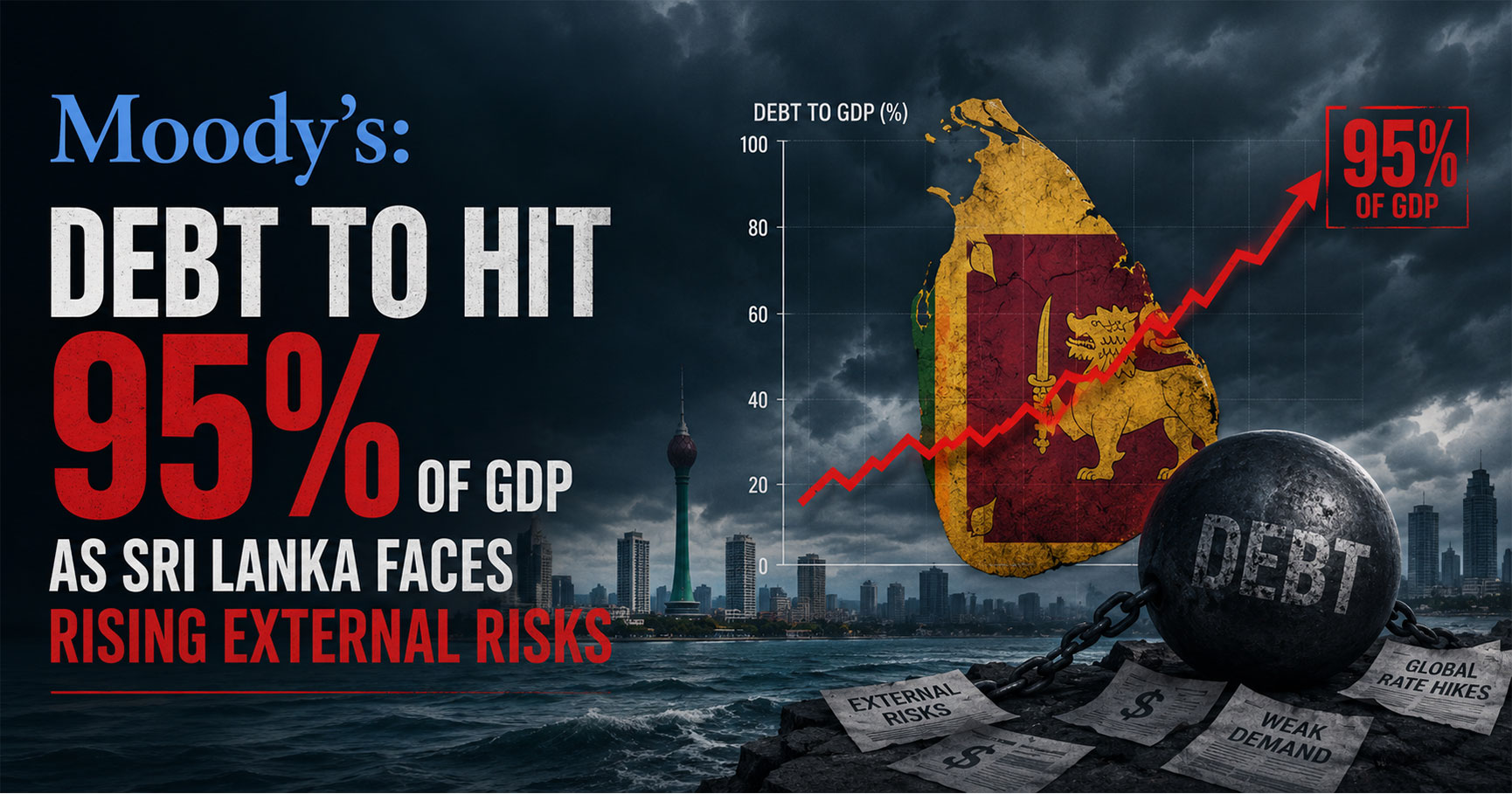
Moody’s projects Sri Lanka’s government debt to reach 95% of GDP and exceed 580% of government revenues in 2026. Interest payments alone are expected to absorb over 40% of government revenue, underscoring the strain on fiscal space.
External vulnerability remains high, with import coverage below three months and an external vulnerability indicator ratio above 250%, signalling continued exposure to liquidity pressures.
IMF Reforms Support Stability, But Risks Persist
The agency noted that revenue‑enhancing measures and sustained primary surpluses have strengthened fiscal performance. However, Sri Lanka’s ability to manage its debt obligations remains constrained by high interest costs and limited external buffers.
Moody’s warned that Sri Lanka remains exposed to external shocks, including potential spillovers from the Middle East conflict through energy prices, tourism flows, and balance‑of‑payments dynamics.
Climate‑related risks also pose a significant challenge, with the country vulnerable to severe weather events that could disrupt economic activity and strain public finances.
Growth Outlook Moderates
While near‑term recovery has been robust, Moody’s said longer‑term growth prospects are uncertain. Structural weaknesses—including skilled worker emigration, social vulnerabilities, and weak private investment—continue to weigh on the country’s productive capacity.
Medium‑term growth is expected to remain moderate, with potential growth estimated at around 4%.
Post‑IMF Period Seen as Critical Test
Sri Lanka’s current IMF programme concludes in 2027, after which the country will lose both a key policy anchor and access to concessional external financing. Moody’s cautioned that the period following programme expiry will be a critical test of reform durability, especially as external debt service obligations begin to rise again from 2028.
The stable outlook reflects Moody’s view that risks are balanced at the current rating level, with reform progress offset by persistent structural and external vulnerabilities.
About the Author