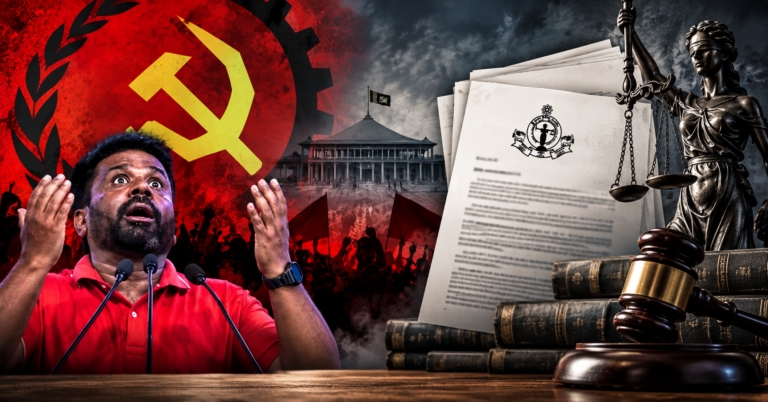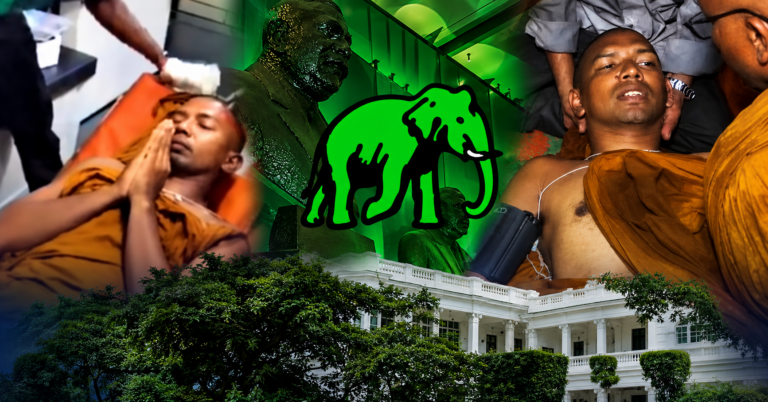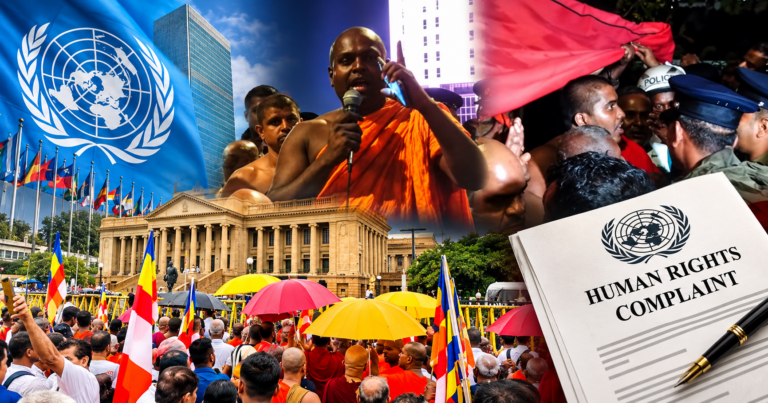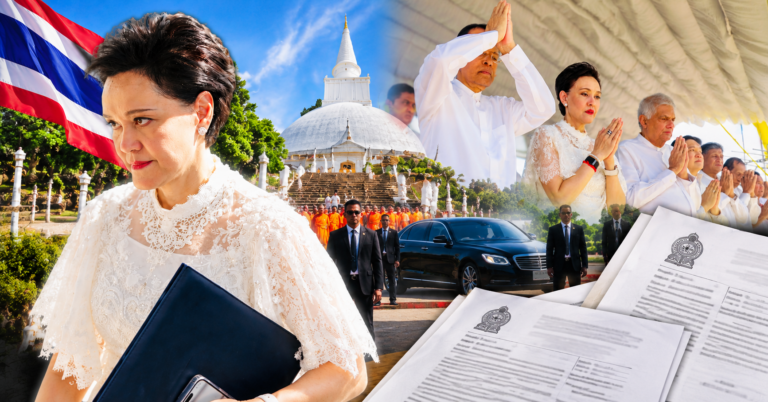

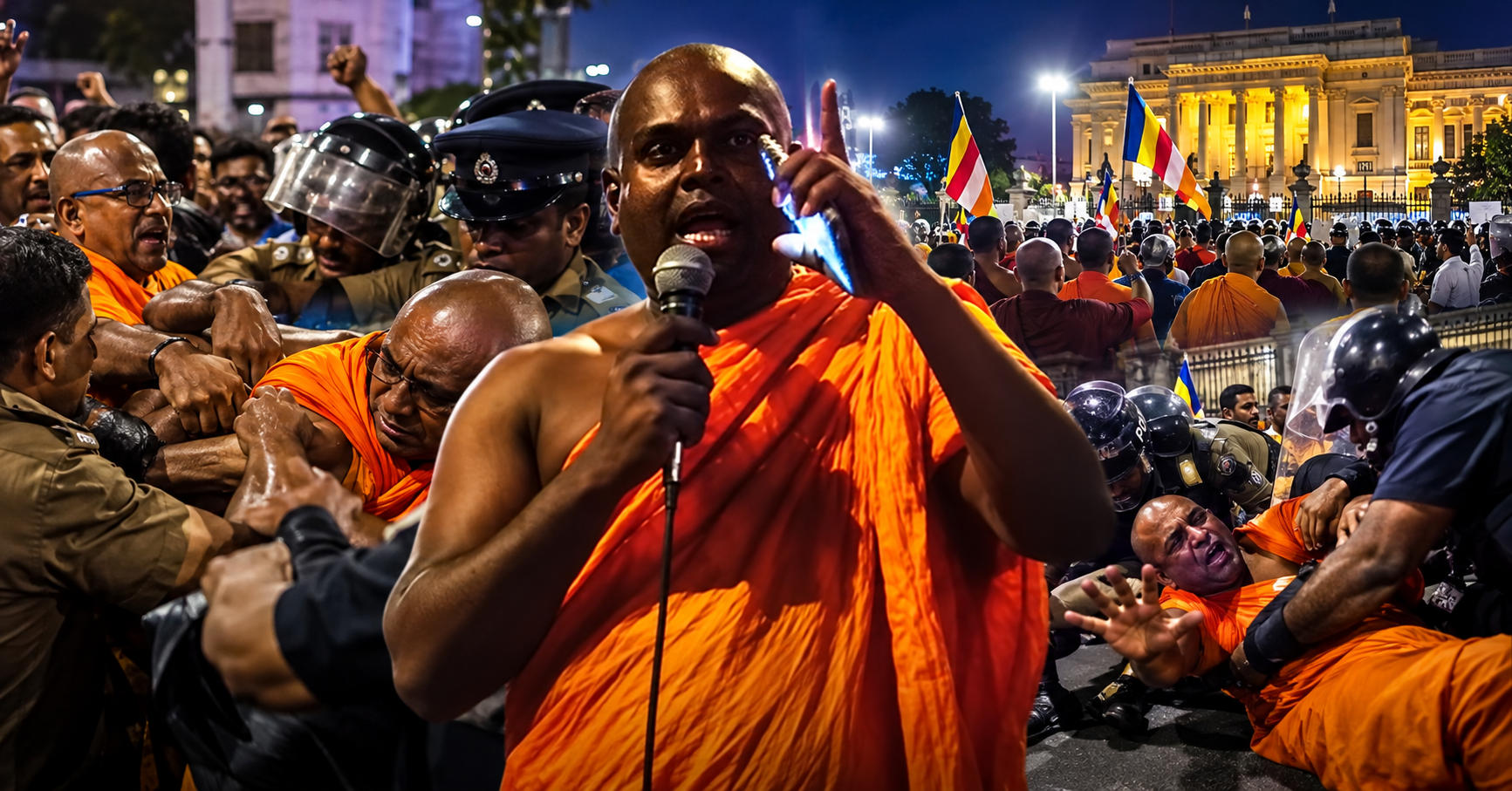
Serious allegations of security personnel provoking confrontations near the Presidential Secretariat raise questions about freedom of peaceful assembly, police use of force and state accountability.
By Panduka Herath
COLOMBO, Sri Lanka, October 15, 2026 — Serious allegations that security personnel used force against Buddhist monks and civilians participating in the “Freedom March” (Nidahase Pada Yathrawa), demanding the release of imprisoned Buddhist monk Ven. Galagoda Aththe Gnanasara Thero, have raised concerns about possible human rights violations near the Presidential Secretariat in Colombo.
According to allegations emerging from the protest, several individuals believed to be attached to the Presidential Security Division allegedly entered the gathering and provoked confrontations with demonstrators. Police officers were subsequently accused of physically assaulting Buddhist monks and other participants.
If substantiated, these allegations could constitute violations of fundamental rights guaranteed under Sri Lanka’s Constitution and international human rights law, extending beyond the legitimate exercise of police powers to maintain public order.
However, the identities of the individuals allegedly involved, the circumstances in which the confrontation began, whether physical assaults occurred, and whether any instructions were issued by senior government officials remain matters requiring independent verification.
There is currently insufficient independently verified evidence to conclude that President Anura Kumara Dissanayake personally ordered or authorized any alleged violence.
The central issue extends beyond whether Gnanasara Thero should be released from prison. It concerns whether citizens can peacefully express opposition to the government without intimidation, violence or arbitrary interference by state authorities.
March From Kandy Reaches Presidential Secretariat
The Freedom March reportedly began on October 10 near the Temple of the Sacred Tooth Relic in Kandy.
Participants travelled through Kadugannawa, Kegalle, Warakapola, Nittambuwa and Kadawatha before reaching Colombo on October 15.
Media reports published on Thursday indicated that substantial police security had been deployed near the Presidential Secretariat, where Buddhist monks and other demonstrators gathered to demand Gnanasara Thero’s release.
According to reports, discussions with officials attached to the Presidential Secretariat failed to produce a definite decision or timetable concerning the monk’s possible release.
Protesters subsequently decided to continue their demonstration.
Meanwhile, tensions reportedly developed between police officers and protesters over the construction of a temporary shelter along Galle Road.
The structure was reportedly moved to the roadside following police requests.
Although these developments provide context for the confrontation, they do not independently establish the more serious allegations of deliberate provocation or unlawful police violence.
Were Security Personnel Sent Into the Protest to Provoke Confrontations?
One of the most serious allegations concerns the possible involvement of plainclothes security personnel in deliberately creating tensions among demonstrators.
If state security officers entered a peaceful gathering with the intention of provoking disorder, such conduct would raise significant concerns about abuse of authority and interference with constitutionally protected freedoms.
The concerns would become even more serious if a confrontation deliberately created by state agents was subsequently used to justify police intervention or the dispersal of peaceful demonstrators.
A credible investigation should therefore examine whether individuals involved in the reported confrontation were members of the Presidential Security Division, another state security agency or the general public.
Investigators should secure and examine CCTV footage, mobile phone recordings, police communication logs, operational instructions and eyewitness accounts.
Any evidence concerning the chain of command and instructions issued to officers deployed at the protest should also be preserved.
Importantly, allegations of deliberate provocation must be established through credible evidence rather than political assumptions.
Should Sri Lanka’s Human Rights Commission Launch an Immediate Investigation?
The Human Rights Commission of Sri Lanka (HRCSL) issued guidelines on May 12, 2023, concerning the responsibilities of state officials and law enforcement authorities in managing civil protests.
These guidelines seek to balance the maintenance of public order with the protection of fundamental freedoms.
Article 14(1)(a) of Sri Lanka’s Constitution guarantees freedom of speech and expression, while Article 14(1)(b) protects freedom of peaceful assembly.
Although these rights are subject to restrictions permitted by law, such restrictions must not be imposed arbitrarily.
The allegations arising from the October 15 demonstration therefore provide grounds for requesting an independent investigation by the HRCSL.
Such an investigation should establish whether police officers used physical force, whether that force was necessary and proportionate, and whether protesters were unlawfully prevented from exercising their constitutional rights.
It should also determine whether any demonstrators sustained injuries and whether those individuals received appropriate medical attention.
What Do United Nations Human Rights Standards Require?
In its 2023 concluding observations on Sri Lanka, the United Nations Human Rights Committee expressed concerns about excessive force used in dispersing peaceful assemblies, the application of counterterrorism legislation against protesters, and shortcomings in accountability for alleged abuses.
The Committee called for allegations of excessive force against peaceful demonstrators to be investigated promptly, thoroughly and impartially.
General Comment No. 37 of the UN Human Rights Committee, which interprets Article 21 of the International Covenant on Civil and Political Rights (ICCPR), establishes important principles governing the right of peaceful assembly.
Under these standards, law enforcement officials must seek to avoid the use of force during peaceful assemblies. Where force is unavoidable, its use must comply with the principles of legality, necessity, proportionality and accountability.
The violent conduct of an individual participant does not automatically transform an entire gathering into a violent assembly.
Consequently, even if one or more individuals engaged in confrontational behaviour during the demonstration near the Presidential Secretariat, that would not automatically justify the indiscriminate use of force against the entire gathering.
Police would be expected to distinguish between individuals engaging in unlawful conduct and those exercising their right to peaceful protest.
These principles apply regardless of the political affiliations, religious identities or demands of the demonstrators.
International Human Rights Organisations Could Be Asked to Examine the Allegations
The reported events could be brought to the attention of national and international human rights organisations through properly documented complaints.
| Organisation | Matters for consideration |
|---|---|
| Human Rights Commission of Sri Lanka | Alleged assaults, excessive police force and violations of fundamental rights |
| UN Office of the High Commissioner for Human Rights | Alleged interference with peaceful assembly and state violence |
| UN Special Procedures | Freedom of peaceful assembly, excessive force and protection of human rights defenders |
| Amnesty International | Protesters’ safety, police conduct and independent documentation |
| Human Rights Watch | Security-force accountability and protection of protest rights |
The availability of these complaint and reporting mechanisms does not mean that any of these organisations has already opened an investigation into the October 15 incident.
Documented evidence, including video recordings, medical reports and witness testimony, would be essential for any meaningful examination of the allegations.
Six Questions President Dissanayake’s Administration and Police Leadership Must Answer
The allegations raise several questions requiring clarification from the Presidential Secretariat, Sri Lanka Police and relevant security authorities.
1. Plainclothes deployment: Were officers attached to the Presidential Security Division deployed among protesters in civilian clothing? If so, what were their instructions?
2. Use of physical force: Did police or other security personnel physically assault Buddhist monks or civilian protesters? If force was used, what was its legal justification?
3. Operational instructions: What orders were issued to police officers responsible for managing the demonstration near the Presidential Secretariat?
4. Alleged provocation: Have authorities initiated an investigation into claims that individuals deliberately attempted to create confrontations among protesters?
5. Injuries and medical evidence: Were any participants injured, and have their statements and medical records been obtained?
6. Preservation of evidence: Have CCTV recordings, police radio communications, deployment records and other relevant evidence been secured against destruction or alteration?
Publicly addressing these questions would help establish the facts and reduce speculation surrounding the conduct of state security agencies.
Gnanasara Thero’s Imprisonment and the Right to Protest Are Separate Legal Questions
The imprisonment of Ven. Galagoda Aththe Gnanasara Thero, the legal validity of the sentence imposed on him, and the possibility of a presidential pardon remain subjects of legal and political debate.
Different sections of Sri Lankan society may hold sharply opposing views about whether the monk should be released.
However, disagreement over his imprisonment does not diminish the constitutional rights of individuals who peacefully advocate for his release.
Citizens are entitled, within the law, to criticise judicial decisions, petition authorities for lawful executive clemency and express opposition to government policies.
Equally, the protection afforded to Buddhist monks and their supporters must extend to trade unions, students, workers, civil society organisations and political groups expressing different or opposing views.
Freedom of peaceful assembly cannot depend on whether the government agrees with the demands being made.
The protection of dissent is a fundamental measure of democratic governance.
State Terrorism or Legitimate Law Enforcement?
The expression “state terrorism” has been raised in connection with allegations that government security personnel deliberately provoked unrest and used police powers to suppress demonstrators.
However, describing the incident in those terms would require credible evidence establishing the nature, purpose and responsibility for the alleged actions.
If an independent investigation confirms that state agents deliberately engineered confrontations or used unnecessary and disproportionate force against peaceful protesters, such findings could establish serious abuses of state power and potential violations of constitutional and international human rights obligations.
Conversely, legitimate and proportionate police action taken in accordance with the law must be distinguished from arbitrary repression.
The responsibility of the government is to ensure that these competing accounts are examined through an impartial and transparent process.
Under President Anura Kumara Dissanayake’s administration, the conduct of law enforcement and security personnel remains a matter of public accountability, irrespective of whether the President personally directed the actions under investigation.
An independent inquiry by the Human Rights Commission of Sri Lanka would be an important step toward determining what occurred.
Such an inquiry should prioritise the preservation of evidence, the protection of witnesses, medical assistance for any injured individuals, and accountability where unlawful conduct is established.
Conclusion: Democracy Is Tested by How Governments Treat Their Critics
The allegations surrounding the Freedom March raise questions extending far beyond the imprisonment of one Buddhist monk.
They concern the relationship between citizens and the state, the limits of police authority, and the protection of peaceful dissent in Sri Lanka.
Demanding accountability for alleged abuses against protesters does not mean endorsing every political or religious position advanced by those demonstrators.
It means recognising that fundamental rights belong equally to all citizens.
The immediate priority should be an independent examination of the allegations, a transparent explanation from the authorities and effective remedies for any violations established by the evidence.
A government’s democratic credentials are measured not merely by how it treats those who support it, but by how effectively it protects the rights of those who peacefully challenge its authority.
Editor’s note: Allegations concerning physical assaults, deliberate provocation and the involvement of presidential security personnel have not been independently verified in this report. They are presented as allegations requiring investigation, not established findings.
Panduka Herath Special Correspondent
About the Author