
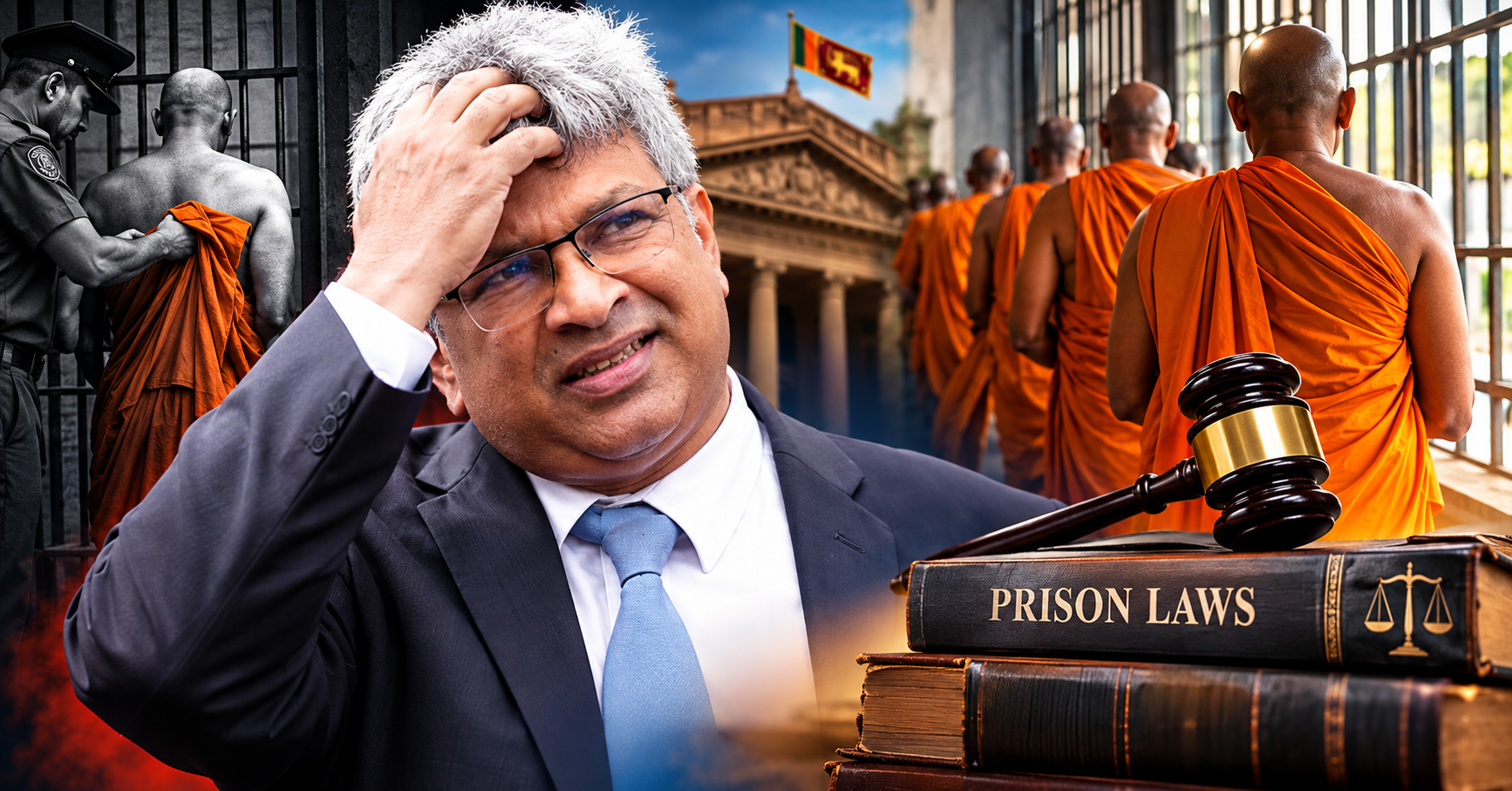
Justice Minister Harshana Nanayakkara announces proposed amendments to prison regulations, allowing imprisoned Buddhist monks to wear their robes when leaving prison and introducing new procedures before their robes can be removed.
Colombo, October 14, 2026 — The Sri Lankan government has moved to revise prison regulations governing the removal of religious robes from imprisoned Buddhist monks, following widespread controversy over the decision to remove the robes of Ven. Galagoda Aththe Gnanasara Thera.
Minister of Justice and National Integration Harshana Nanayakkara announced on Wednesday (14) that a special committee appointed to review the rules, regulations and standing orders under the Prisons Ordinance had submitted its interim report to President Anura Kumara Dissanayake.
The proposed amendments introduce new safeguards concerning the removal of Buddhist monks’ robes and explicitly permit imprisoned monks to wear their traditional religious attire when taken outside prison, unless their respective Buddhist chapter or monastic authority directs otherwise.
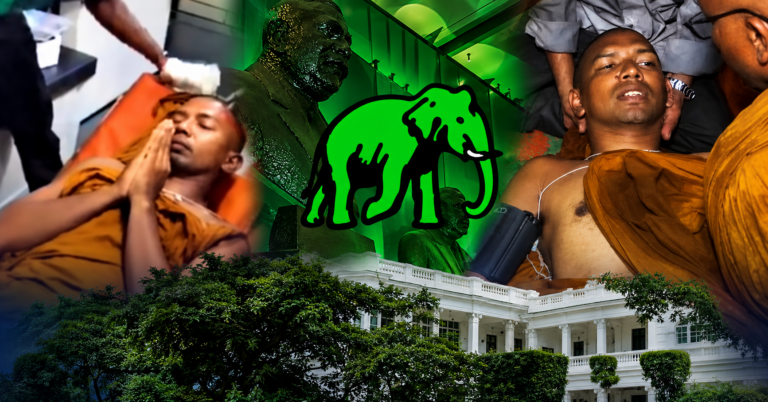
The announcement follows objections raised by Buddhist religious leaders over the treatment of Gnanasara Thera after his imprisonment.
Government Responds to Controversy Over Removal of Monks’ Robes
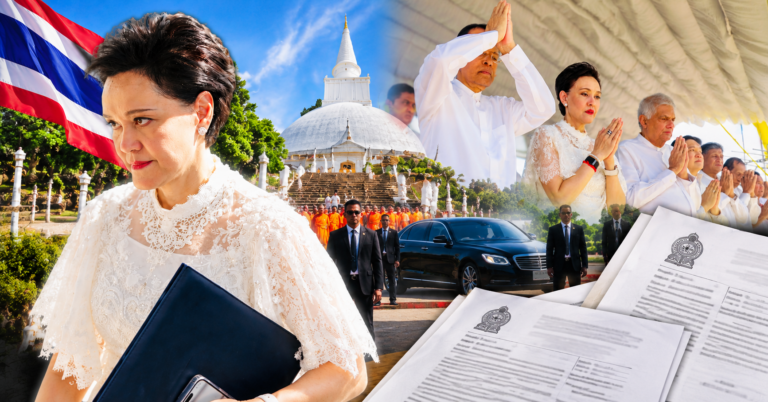
Speaking at a special media briefing at the Ministry of Justice, Minister Nanayakkara said the controversy surrounding Gnanasara Thera had prompted discussions between President Dissanayake and representatives of the chief prelates of Sri Lanka’s three main Buddhist monastic traditions.
The discussions were attended by the Justice Minister and Minister of Buddhasasana, Religious and Cultural Affairs Sunil Senevi.
According to Nanayakkara, the President agreed that the existing prison rules and administrative procedures concerning religious attire required revision.
The President subsequently appointed a special committee to examine the relevant provisions of the Prisons Ordinance and recommend amendments.
During the discussions, President Dissanayake had assured the Buddhist representatives that steps would be taken to resolve the issue within two weeks.
The committee has now submitted its interim recommendations to the President, with a copy forwarded to the Justice Minister through the Presidential Secretary.
New Restrictions Proposed on Removing Buddhist Monks’ Robes
One of the most significant recommendations concerns the amendment of Prison Standing Order 356 through the introduction of a new provision, identified as Standing Order 356(A).
Under the proposed arrangement, prison authorities would be required to notify the Department of Buddhist Affairs before taking action concerning the removal of robes worn by a Buddhist monk upon admission to prison as a convicted prisoner.
The Commissioner of Prisons would be given a period of ten days to take appropriate action following the required notification and consultation process.
The proposed procedure would introduce an additional administrative safeguard concerning the religious identity and traditional attire of imprisoned Buddhist clergy.
However, the Minister’s statement does not establish that removing a monk’s robes would be prohibited under all circumstances.
Imprisoned Monks to Be Allowed to Wear Robes Outside Prison
A second major recommendation involves amendments to Prison Standing Order 550.
Under the proposed changes, a Buddhist monk serving a prison sentence would be permitted to wear his religious robes whenever he is taken outside the prison for court proceedings or other authorised purposes.
This permission would remain in effect unless the relevant Buddhist monastic chapter or religious authority formally communicates that the monk should no longer wear the robes.
The amendment would clarify the circumstances under which imprisoned Buddhist monks may continue wearing their traditional religious attire while outside prison premises.
The Justice Minister described the two proposed changes as the central elements of the committee’s interim recommendations.
Similar Protections for Clergy of Other Religions
The proposed reforms would not be restricted exclusively to Buddhist monks.
Minister Nanayakkara explained that corresponding provisions should also be applied, with appropriate modifications, to religious clergy belonging to other faiths who are imprisoned.
This would allow prison authorities to consider the religious traditions and requirements of different faith communities when determining the treatment of religious attire.
Justice Minister Orders Prison Authorities to Implement Recommendations
Minister Nanayakkara confirmed that he had already forwarded the committee’s interim report to the Acting Commissioner General of Prisons.
He said instructions had been issued to amend the existing prison standing orders in accordance with the committee’s recommendations.
The committee is chaired by W. P. Senadheera, Secretary to the Ministry of Buddhasasana, Religious and Cultural Affairs.
Its other members include Piyumanthi Peiris, Additional Secretary to the Ministry of Justice and National Integration; Wasantha Ariyaratne, Additional Secretary to the Ministry of Public Administration, Provincial Councils and Local Government; Commissioner General of Buddhist Affairs Gamini Senarathna; and Commissioner of Prisons A. C. Gajanayake.
A Turning Point in the Gnanasara Thera Robe Controversy?
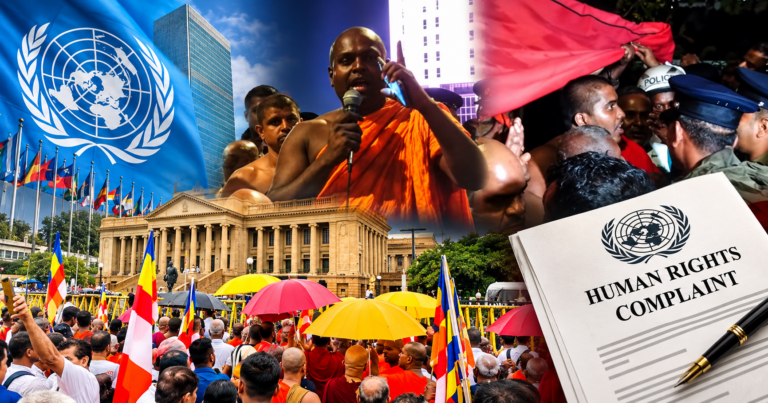
The government’s decision comes amid ongoing legal controversy over the removal of Gnanasara Thera’s robes following his imprisonment.
Petitions challenging the decision have been brought before the Court of Appeal, placing the issue of religious attire and prison administration under judicial scrutiny.
The proposed amendments could significantly change how Sri Lankan prison authorities handle the religious clothing of Buddhist monks serving custodial sentences.
They also raise broader questions concerning religious freedom, prison discipline and the recognition of religious identity within the correctional system.
While the government’s announcement represents a significant shift towards recognising the right of imprisoned Buddhist monks to retain their religious attire in specified circumstances, important questions remain.
In particular, the Justice Minister did not explicitly confirm that a final order had been issued allowing Gnanasara Thera personally to retain his robes, nor did he establish that the proposed amendments had already entered into force.
The immediate question is whether the proposed reforms will resolve the controversy surrounding Gnanasara Thera and establish lasting protections for the religious attire of imprisoned Buddhist clergy.
The implementation of the revised standing orders, and their application to the ongoing dispute, will therefore be closely watched by Buddhist religious leaders, legal observers and the wider public.
Source: Ministry of Justice and National Integration, Sri Lanka — Official media statement issued on October 14, 2026.
About the Author