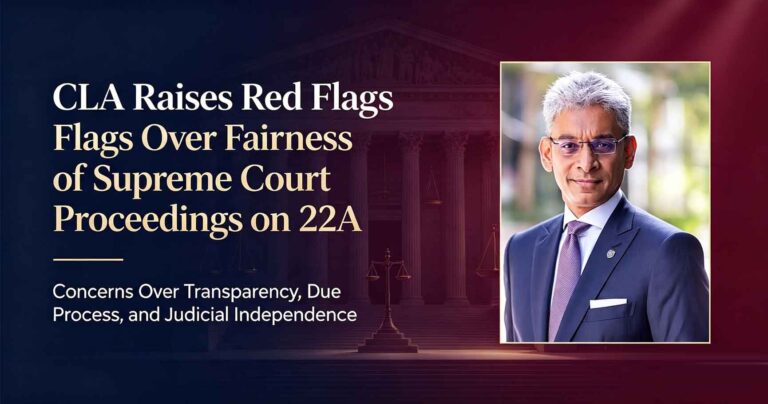

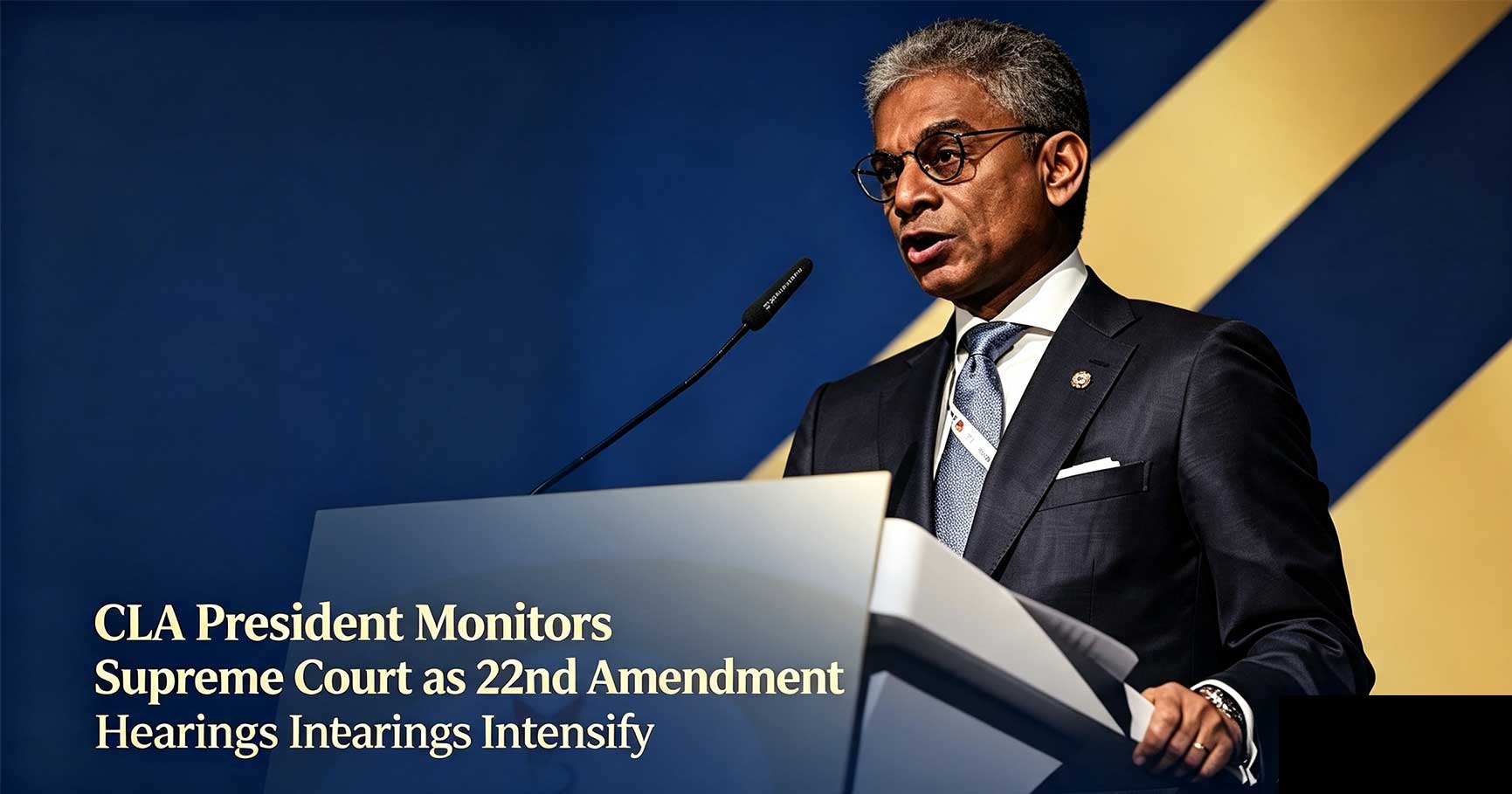
The Supreme Court’s examination of the Government’s proposed 22nd Amendment entered its second day yesterday under heightened domestic and international attention, with Commonwealth Lawyers’ Association (CLA) President Steven Thiru present in court as hearings resumed.
Thiru’s attendance comes weeks after he cautioned that Sri Lanka could mirror Zimbabwe’s 2017 judicial crisis if it moves ahead with extending the retirement age of sitting superior court judges without broad public consultation. Speaking at a Bar Association of Sri Lanka (BASL) forum in July, he emphasised that the core concern was not the retirement age itself, but the timing, manner, and application of the amendment — particularly its impact on judicial independence.

Long first day of hearings
The Supreme Court began hearing the 67 petitions filed against the Bill on Tuesday (01), sitting for nearly 12 hours until 10.30 pm. Of the petitions, 41 were lodged online, reflecting the scale of public and professional opposition to the proposed constitutional change.
The case is being heard before a five‑judge bench comprising Chief Justice Preethi Padman Surasena, Achala Wengappuli, Arjuna Obeyesekere, Sampath Abeykoon, and Gihan Kulatunga.
Second day focuses on petitioner submissions
Proceedings continued yesterday (02), marking the second consecutive day of arguments. Lawyers for the petitioners are currently presenting submissions challenging the constitutionality of the amendment, which seeks to raise the retirement age of Supreme Court judges from 65 to 67 and Court of Appeal judges from 63 to 65.
Once petitioners conclude, counsel for intervening petitioners will make their submissions, followed by the Attorney General, who is expected to defend the Bill’s constitutionality.
Concerns over judicial independence
Petitioners argue that altering the tenure of sitting judges through a constitutional amendment risks undermining judicial independence and could violate the sovereignty of the people under Article 3 of the Constitution. The Supreme Court must determine whether any provisions of the Bill require approval at a referendum in addition to a two‑thirds parliamentary majority.
Thiru’s presence signals growing international concern over the implications of the amendment, particularly its potential to reshape the judiciary while cases involving the same judges are pending.
About the Author