
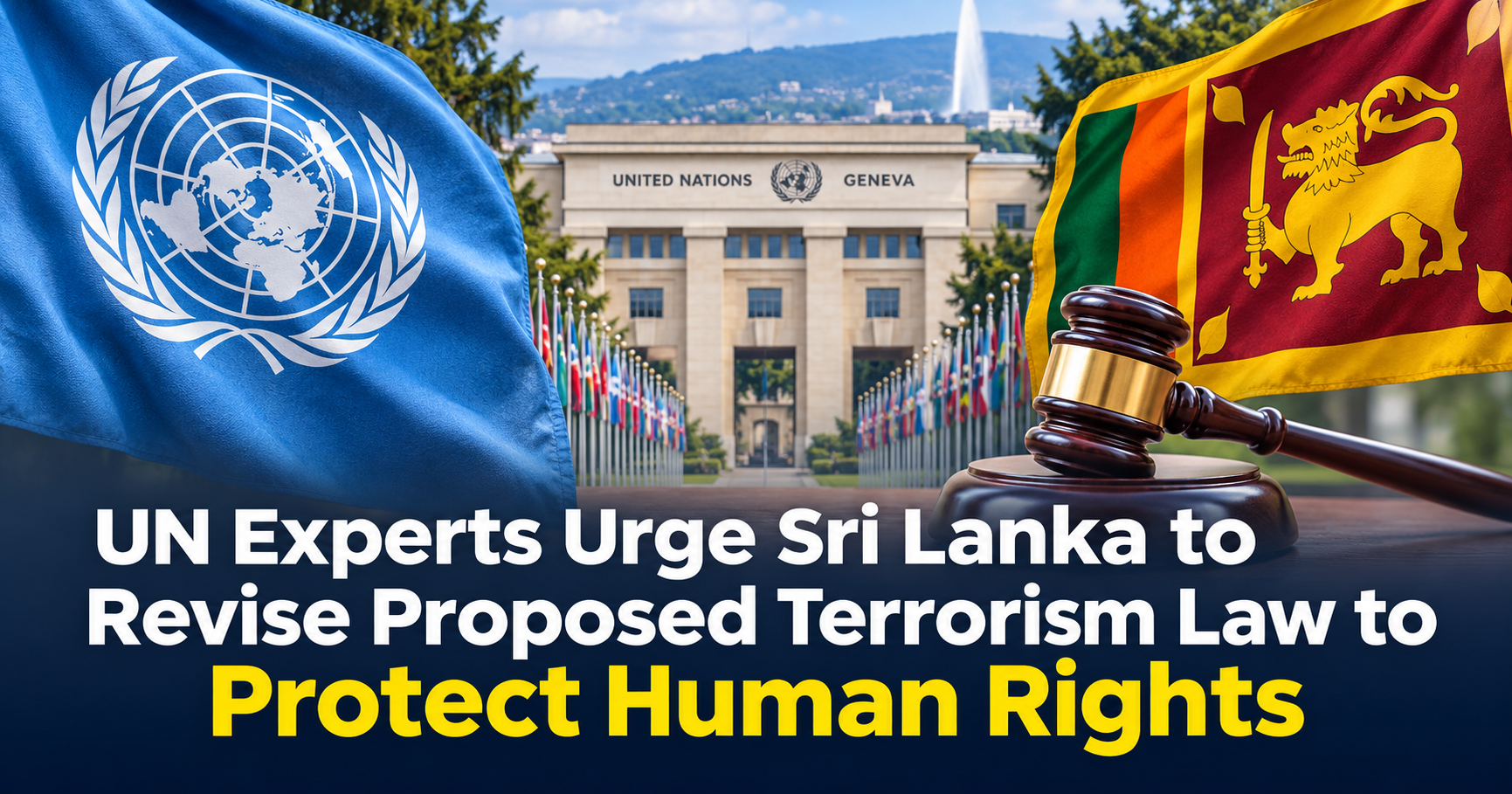
GENEVA, November 9, 2026 — United Nations human rights experts have urged Sri Lanka to revise its proposed Protection of the State from Terrorism Act (PSTA), warning that significant concerns remain over detention powers, military involvement, safeguards against torture and accountability for official misconduct.
In a joint statement, the experts welcomed the proposed repeal of the Prevention of Terrorism Act (PTA) of 1979. They said the existing legislation had enabled serious human rights violations, including torture and enforced disappearances, before, during and after Sri Lanka’s 26-year civil war.
Minorities, human rights defenders, journalists and civil society were among those subjected to abuse under the PTA, they said.
Although the Government’s latest PSTA draft represented a substantial improvement following feedback, the experts stressed that further amendments were necessary to bring the bill into line with international human rights law.
Judicial oversight of detention
The experts called for detention orders to be subject to prompt and effective judicial scrutiny. Courts must be able to examine whether detention is lawful, necessary and proportionate, and order a detainee’s release.
They also said the Independent Review Committee responsible for hearing detention appeals must operate independently and issue binding decisions.
Detainees should have guaranteed access to lawyers, interpretation, legal aid, independent medical examinations and contact with their families. The Human Rights Commission of Sri Lanka must also be able to visit detainees promptly.
Transfers between detention facilities should be recorded and reported to help prevent enforced disappearances and detention without access to the outside world, the experts said.
Narrower definition of terrorism
The experts urged the Government to restrict the definition of terrorism to acts intentionally causing death or serious injury, excluding mere property damage.
Offences involving expression should require a likelihood of causing terrorist violence, they added.
They also called for the removal of military powers to arrest, question and search people under the proposed legislation, citing the history of military violations.
Preventive powers should be more narrowly defined and subjected to judicial oversight. The experts further recommended clearer and higher thresholds for banning organisations, time limits on such bans, and cumulative limits on restriction orders and orders prohibiting access to places.
Protection for journalists and legal confidentiality
The statement called for stronger procedural safeguards, including the exclusion of evidence and statements obtained unlawfully or through torture or ill-treatment.
The experts said protections governing the withholding of evidence on national security grounds must be strengthened to ensure due process.
Information involving journalistic sources, lawyer-client privilege, professional confidentiality and human rights monitoring should also be protected from compulsory disclosure.
They urged limits on presidential authority to direct the implementation of the law and opposed the continued transitional application of the PTA once the PSTA takes effect.
Accountability for abuses
The experts called for stronger oversight and effective remedies for violations committed under the proposed law.
These should include release from unlawful detention, exclusion of improperly obtained evidence, disciplinary or criminal proceedings against responsible officials, and reparations for victims.
Compensation, rehabilitation, apologies and guarantees against repetition were among the remedies identified.
They also rejected provisions that would shield officials from responsibility for wrongful acts.
“Countering terrorism is only effective if human rights are respected,” the experts said.
The experts had previously raised concerns about an earlier PSTA draft and called for consultations with civil society and other stakeholders. They have also addressed related legislative reforms concerning non-governmental organisations and organised crime.
The group offered technical assistance to help the Sri Lankan authorities improve the bill.
The statement was issued by UN special rapporteurs and working group members whose mandates cover counterterrorism, arbitrary detention, enforced disappearances, torture, freedom of expression, human rights defenders, extrajudicial executions, and the independence of judges and lawyers.
About the Author