
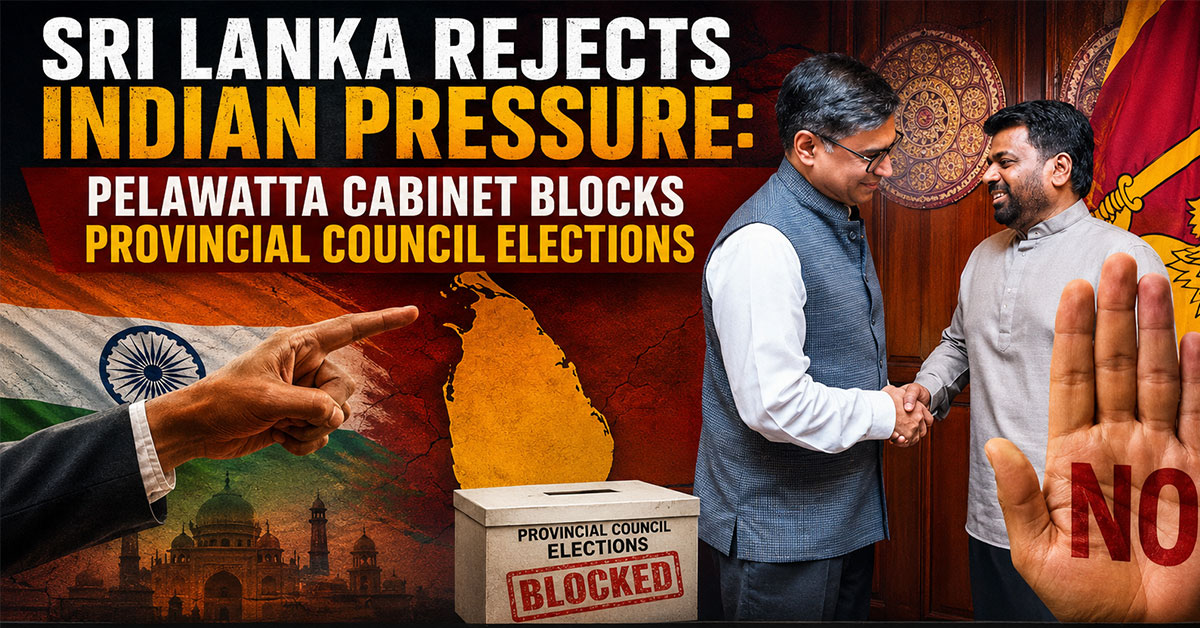
Sri Lanka’s government has decided not to proceed with Provincial Council elections despite renewed pressure from India, following extensive discussions at the Pelawatta Cabinet meeting, political sources revealed. The decision marks one of the strongest rejections of India’s long‑standing call for the full implementation of the 13th Amendment and the revival of the Provincial Council system.
India Reiterates Its Demands
During his recent visit to Colombo, Indian Foreign Secretary Vikram Misri conveyed a firm message from New Delhi, urging Sri Lanka to:
Hold Provincial Council elections without further delay
Fully and effectively implement the 13th Amendment
Honour commitments made during President Anura Kumara Dissanayake’s 2024 New Delhi visit and Prime Minister Narendra Modi’s 2025 Colombo visit
India’s Ministry of External Affairs later issued an official diplomatic note reaffirming these expectations. Modi himself publicly restated India’s position during talks with President Dissanayake, emphasising that power‑sharing and constitutional implementation were essential to resolving long‑standing issues faced by Sri Lanka’s Tamil community.
India has maintained this stance for years. In 2021, then Foreign Secretary Harsh Vardhan Shringla also pressed Colombo to conduct Provincial Council elections “as soon as possible.”
Pelawatta Cabinet Pushes Back
Despite the renewed diplomatic pressure, the Pelawatta Cabinet concluded that Sri Lanka would not hold Provincial Council elections under any form of external influence. According to political insiders, the discussions were lengthy and focused heavily on India’s insistence.
Notably, no representatives from the National People’s Power (NPP) participated in these talks.
JVP Fires the First Salvo
Following the Cabinet meeting, the JVP launched a direct counter‑attack against India’s position.
Minister of Agriculture, Lands and Irrigation K.D. Lalkantha, speaking after an event in Gannoruwa on August 13, declared:
“Foreign countries have no right to pressure the government to hold Provincial Council elections. This is a sovereign nation. They may express their opinions, but they cannot exert pressure.”
His remarks mark the first public pushback from the government against India’s intervention on the matter.
22nd Amendment Also Discussed
The Pelawatta meeting also addressed the proposed 22nd Amendment to the Constitution. Despite objections from sections of the legal community and the Mahanayake Theras, the Cabinet agreed that the government should move forward with the amendment.
About the Author