
WSJ reports Washington warned Colombo as vessels face shortages of food, water and fuel
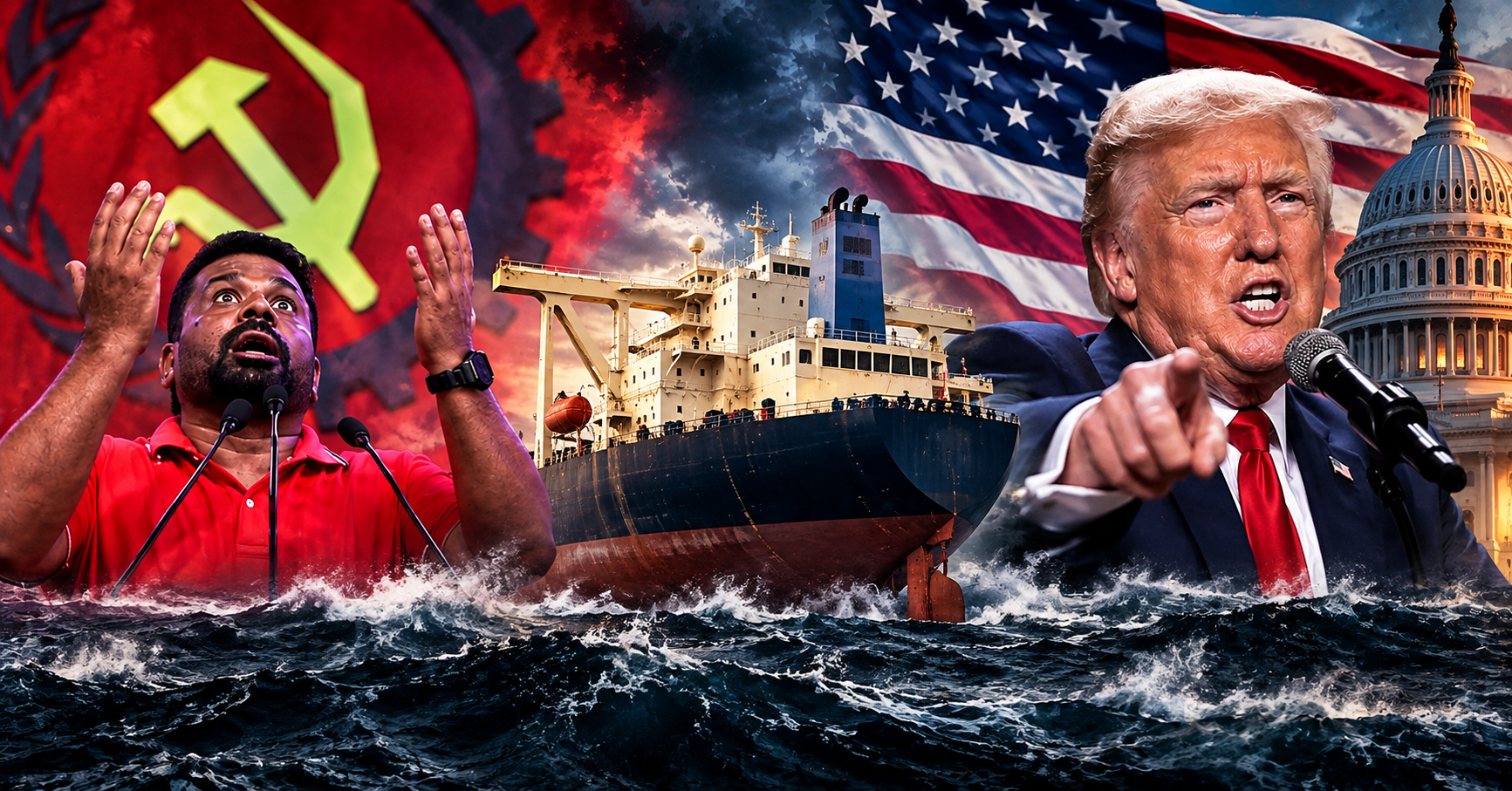
The United States has warned that Sri Lankan companies or service providers could face the risk of U.S. secondary sanctions if they provide food, water, fuel or other services to 19 Iran-linked oil tankers currently positioned in the Indian Ocean southwest of Sri Lanka, according to a report by The Wall Street Journal.
According to The Wall Street Journal report published on October 1, titled “U.S. Pressure Campaign Leaves Iranian Tankers Stranded in Asian Waters,” nearly 20 Iran-linked oil tankers have become stranded in waters around Sri Lanka and Malaysia. Many of the vessels are reportedly empty and are running low on essential supplies, including food, drinking water and fuel.
Washington reportedly alerted Colombo as early as August
According to Sri Lankan government documents cited by the WSJ, the U.S. Embassy in Colombo informed the Sri Lankan government in August that it was monitoring 19 Iranian oil tankers located west of Sri Lanka.
The report says the United States also urged Sri Lankan authorities to alert local port and maritime service providers against assisting the vessels, warning that such assistance could expose those involved to U.S. secondary sanctions.
As the pressure intensified, several vessels reportedly moved farther away from Sri Lankan waters and remained in the Indian Ocean. Some vessels have also reduced engine operations in an effort to conserve fuel, according to shipping data and Sri Lankan maritime industry sources cited in the report.
Sri Lanka had previously acknowledged the sanctions risk
The issue did not emerge solely from the latest WSJ report.
On September 20, Sri Lanka’s Sunday Times reported that authorities were taking steps to prevent local companies from becoming exposed to secondary sanctions by providing services to vessels already subject to U.S. sanctions.
Deputy Minister of Ports and Civil Aviation Janitha Kodithuwakku told the newspaper that information received from the U.S. Embassy regarding sanctioned vessels was being passed on to relevant service providers.
However, he also noted that Sri Lanka is legally required to deny services to vessels subject to United Nations sanctions.
This highlights an important distinction: U.S. sanctions and United Nations sanctions are not the same. Nevertheless, U.S. secondary sanctions could create significant financial and commercial risks for Sri Lankan companies engaged in international business or dependent on access to the U.S. financial system.
More than 40 Sri Lankan officials receive specialised U.S. training
Meanwhile, the U.S. Embassy in Colombo conducted a three-day training programme from September 9 to 11 focusing on identifying maritime sanctions evasion.
More than 40 Sri Lankan officials representing institutions including the Sri Lanka Atomic Energy Regulatory Council, Central Bank of Sri Lanka, Sri Lanka Coast Guard, Merchant Shipping Secretariat, Sri Lanka Ports Authority, Ministry of Defence and Sri Lanka Navy participated in the programme.
Officials were reportedly trained to identify methods used to evade sanctions, including suspicious vessel activity, manipulation of vessel identity and tracking information, complex ownership structures, ship-to-ship transfers at sea and the use of falsified documentation.
What did Vijitha Herath previously say?
Foreign Minister Vijitha Herath said on September 8 that approximately 47 vessels had been identified in international waters beyond Sri Lanka, including several Iranian vessels.
He said the vessels were not within Sri Lankan territorial waters and that, at that time, none had requested facilities or assistance from the Sri Lankan government. He also stated that Sri Lanka had not provided such assistance.
Herath further confirmed that the U.S. Embassy in Colombo had initially informed the Ministry of Foreign Affairs about the vessels.
At the time, the U.S. Embassy said it would not publicly comment on the contents of its private diplomatic communications with Sri Lankan authorities.
U.S. tightens sanctions pressure
The developments come as the U.S. Treasury Department has expanded sanctions during 2026 targeting Iran’s oil transportation network and its associated “shadow fleet.”
On May 19, the U.S. Treasury announced that the Office of Foreign Assets Control (OFAC) had blocked 19 vessels connected to the transportation of Iranian petroleum and petrochemical products.
In another announcement issued on September 29, the U.S. Treasury emphasised that entities assisting Iran in circumventing sanctions could face restrictions on their access to the U.S. financial system, while parties continuing certain forms of business with Iran could be exposed to secondary sanctions.
The challenge now facing Sri Lanka
The issue confronting Sri Lanka therefore extends beyond the simple question of whether food or fuel should be supplied to the 19 vessels.
On one hand, there are questions relating to international shipping and Sri Lanka’s obligations under international law. On the other, a Sri Lankan shipping agent, fuel supplier, bank or other company providing services to a U.S.-sanctioned vessel could potentially expose itself to U.S. secondary sanctions.
According to the latest Wall Street Journal report, the presence of Iran-linked vessels in waters near Sri Lanka has therefore developed into a practical diplomatic, maritime and economic challenge for Colombo.
However, it would not be accurate at this stage to state that the United States has officially announced that sanctions will be imposed on the Sri Lankan state itself.
A more precise interpretation of the reports currently available is that Washington has warned that Sri Lankan companies, institutions and service providers that assist or provide services to sanctioned Iranian vessels could face exposure to U.S. secondary sanctions.
About the Author