
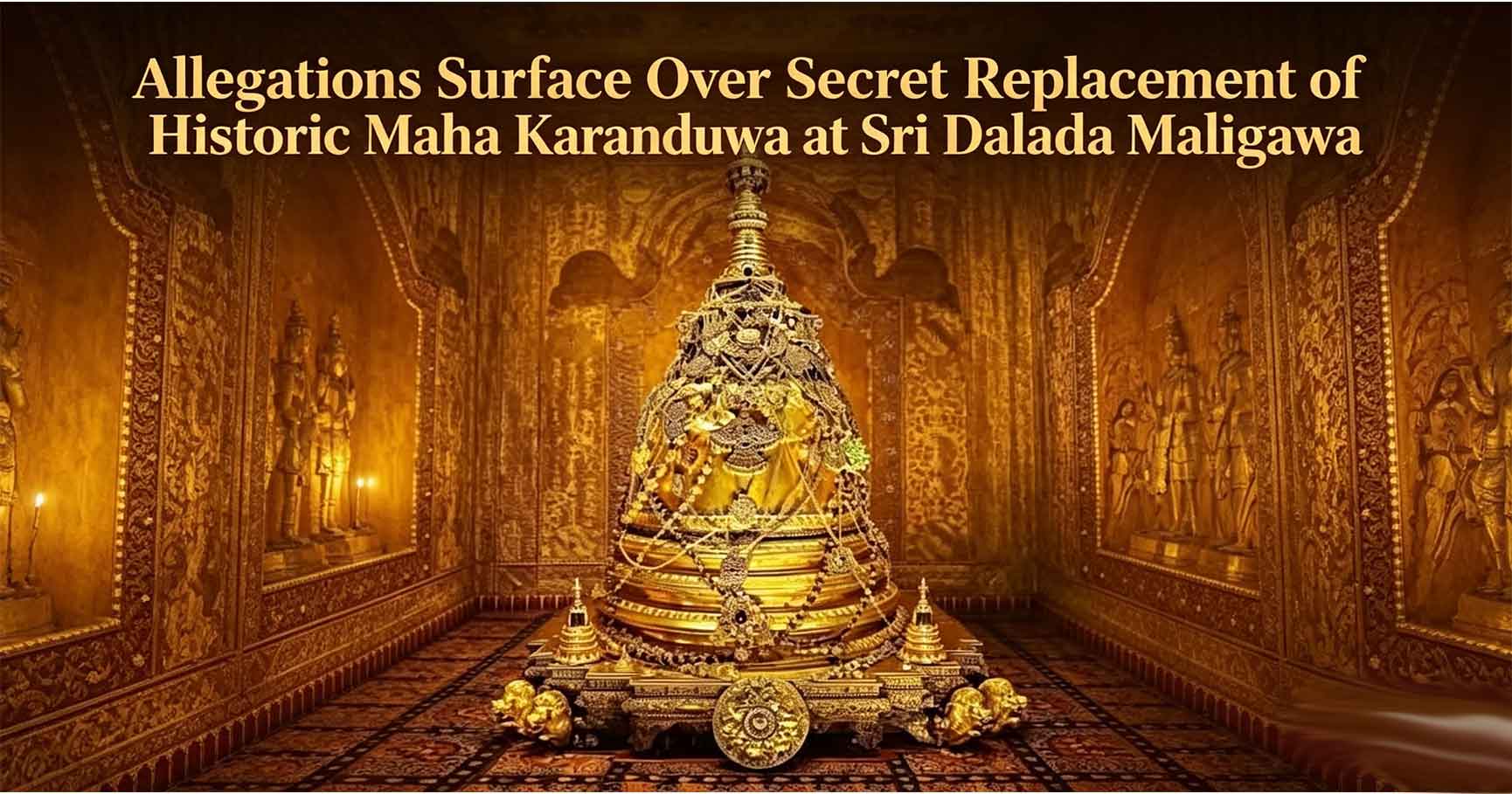
Kandy – Serious allegations have emerged claiming that the historic Maha Karanduwa—the ceremonial casket offered by King Keerthi Sri Rajasinghe to enshrine and protect the Sacred Tooth Relic—has been secretly removed and replaced with a newly crafted casket. The alleged replacement is said to have taken place on the 8th of this month, without public disclosure.
According to sources who raised the alarm, the new casket is reportedly a gold‑and‑gem‑encrusted structure weighing 86.04 kilograms, containing over 65 kilograms of pure gold and 1.48 kilograms of precious stones. The crafting of the new casket has been linked to businessman Amantha Amarasuriya, whose involvement and connections are now under scrutiny.
Questions Over Transparency and Religious Protocol
Critics argue that if the replacement had been done with proper religious intention, it would not have required secrecy. They claim the concealment raises concerns about political motives and possible attempts to influence public perception, particularly among Sinhala Buddhists for whom the Tooth Relic and its casket hold deep cultural and historical significance.
Following the revelations, officials associated with the Temple of the Tooth issued statements denying wrongdoing and insisting that the original Maha Karanduwa remains safely stored within the premises. However, those making the allegations have challenged temple authorities to publicly display the historic casket within seven days, asserting that it is no longer present.
Businessman’s Role Under Spotlight
The controversy has intensified with calls for clarity regarding businessman Amantha Amarasuriya’s role. Questions have been raised about:
- His business background
- His connections to “born‑again” religious groups
- Whether he holds a position within the Miracle Dome’s executive committee
- Who accompanied him during meetings with the President
Opposition voices claim they are prepared to release further details if official explanations are not provided.
Political Undercurrents
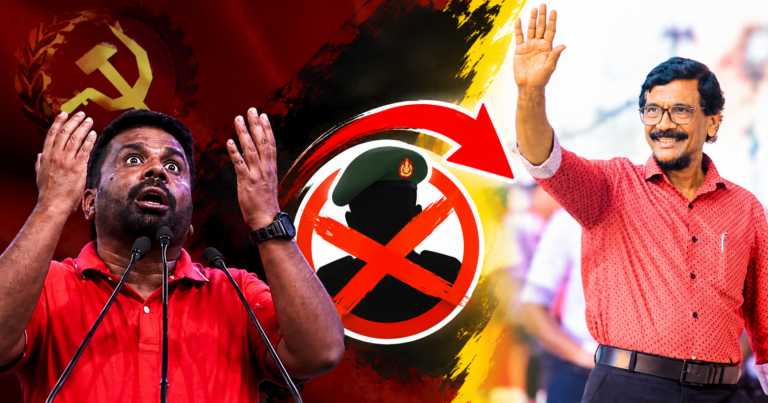
The allegations have also reignited long‑standing debates about the relationship between the JVP/NPP political movement and Buddhism. Critics argue that despite recent public messaging about religious respect, the movement’s historical Marxist roots included strong criticism of organized religion. They point to past incidents during the 1987–89 period—when violent extremist factions associated with the JVP were responsible for widespread killings, including Buddhist monks—as evidence of ideological hostility. (Disclaimer: Violent extremist groups such as the DJV/JVP factions of 1987–89 were responsible for severe harm and loss of life, according to official records.)
Supporters of the NPP, however, maintain that the party today advocates religious freedom and rejects extremist interpretations of its past.
Historical Significance of the Maha Karanduwa
The Maha Karanduwa holds a central place in Sri Lanka’s cultural and political heritage. Since the arrival of the Sacred Tooth Relic during King Kithsirimevan’s reign, possession and protection of the Relic symbolized legitimate kingship. Even during British rule under the Kandyan Convention of 1815, colonial authorities pledged to safeguard Buddhism and the Relic.
The casket crafted under King Vimala Dharma Suriya II and completed by King Keerthi Sri Rajasinghe is considered one of the most sacred and historically valuable artifacts in the Temple of the Tooth.
Call for Clarity
With public concern growing, religious leaders, historians, and political observers are urging authorities to provide transparent information regarding the status of the original Maha Karanduwa. The issue continues to generate intense debate, with cultural heritage, religious sentiment, and political trust all intertwined.
About the Author