
A leading constitutional scholar has strongly challenged the Government’s core justification for the 22nd Amendment, arguing that the proposal neither reduces judicial delays nor strengthens the quality of adjudication, while unquestionably striking at the heart of judicial independence.
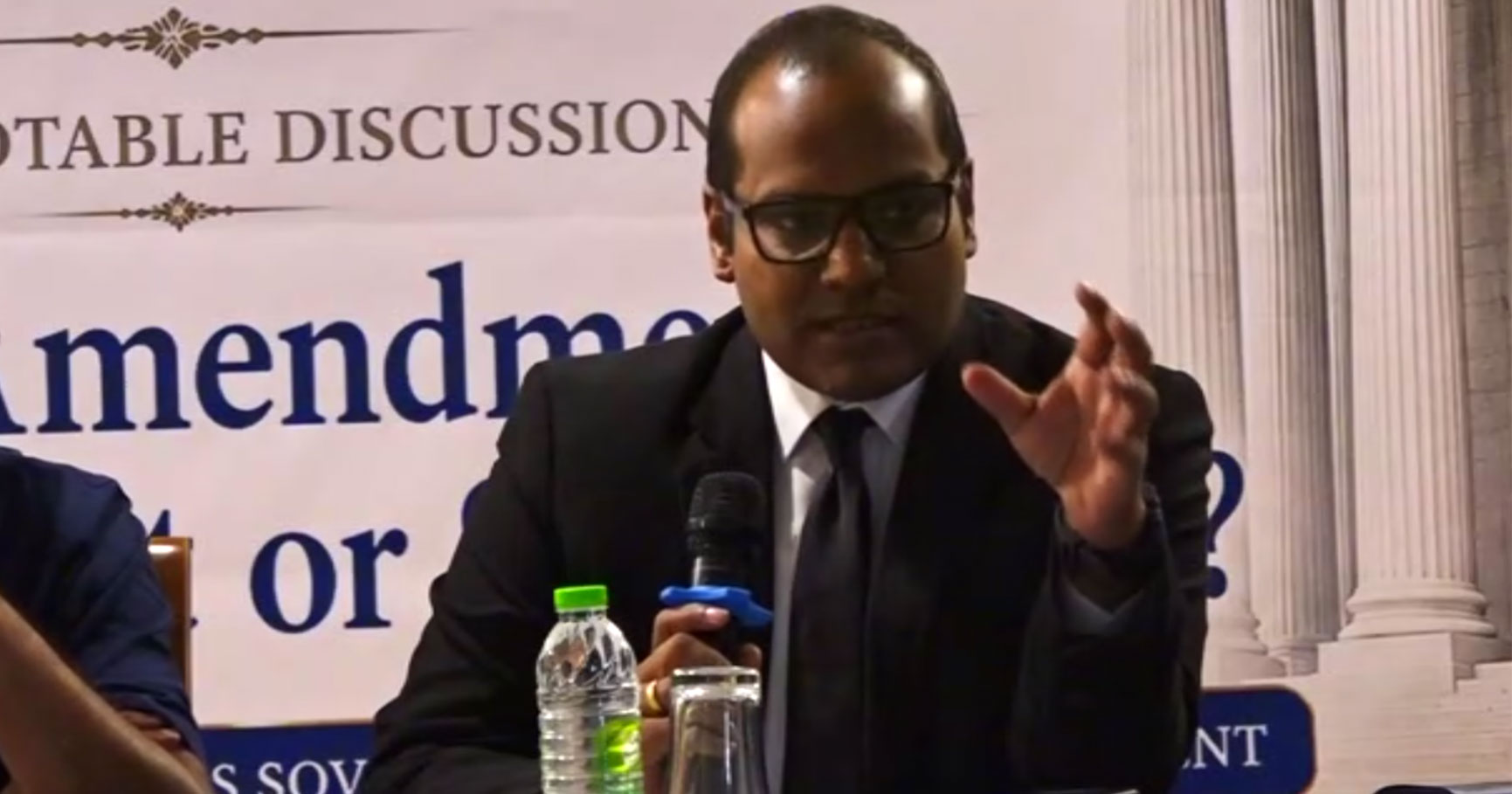
Speaking at the SAVE OUR SOVEREIGNTY discussion, Former Head of the Department of Law at the University of Jaffna and Attorney‑at‑Law Dr. Kumaravadivel Guruparan said the Government’s claim that raising the retirement age of judges will minimise delays is “fundamentally flawed.”
“How does this reduce delays?” — Guruparan dismantles the Government’s main argument Guruparan said the proposal does not increase the number of judges, nor expand court capacity, and therefore cannot meaningfully reduce case backlogs.
The Supreme Court and Court of Appeal already saw their cadre expanded through a previous constitutional amendment.
Extending retirement ages simply keeps the same number of judges in place for two additional years.
Lower courts — High Courts, District Courts and Magistrates’ Courts — will also not see an increase in courtrooms or judicial appointments.
“If the same judges are going to sit for two more years, how does that help with minimizing delay?”— Dr. Kumaravadivel Guruparan
He argued that meaningful reform requires more judges and more courthouses, not merely longer tenures for existing ones.
Quality of adjudication? Guruparan questions the logic
Responding to claims that the amendment will retain “talented and experienced judges,” Guruparan said this presupposes that incoming judges are of lower quality — a claim he rejects.
He pointed to structural issues in judicial recruitment:
Superior Court appointments overwhelmingly come from the Attorney General’s Department, with minimal representation from the private bar.
In contrast, countries like India draw more broadly from the private bar, strengthening diversity and expertise.
If quality is the concern, he said, entry requirements and recruitment practices — not retirement ages — must change.
A clear threat to judicial independence
Guruparan emphasised that the 22nd Amendment is undeniably a matter of judicial independence.His remarks come amid growing criticism from the Bar Association of Sri Lanka and international observers, including the UN Special Rapporteur on Judicial Independence, who warned that altering the tenure of sitting judges risks undermining public confidence in the judiciary.
Context: A nation divided over the 22nd Amendment
The Government officially gazetted the 22nd Amendment on 7 August 2026, proposing to raise the retirement age of Supreme Court judges to 67 and Court of Appeal judges to 65.
The move has triggered widespread opposition from judges, lawyers, civil society groups and constitutional experts, who argue that altering the tenure of incumbent judges violates core principles of judicial independence.
Guruparan’s bottom line
Raising retirement ages does not reduce delays.
It does not improve quality without deeper structural reforms.
It directly affects judicial independence, making it a constitutional issue of the highest order.
His intervention adds significant weight to the growing chorus of voices warning that the 22nd Amendment is not an administrative reform — but a constitutional turning point.
About the Author