
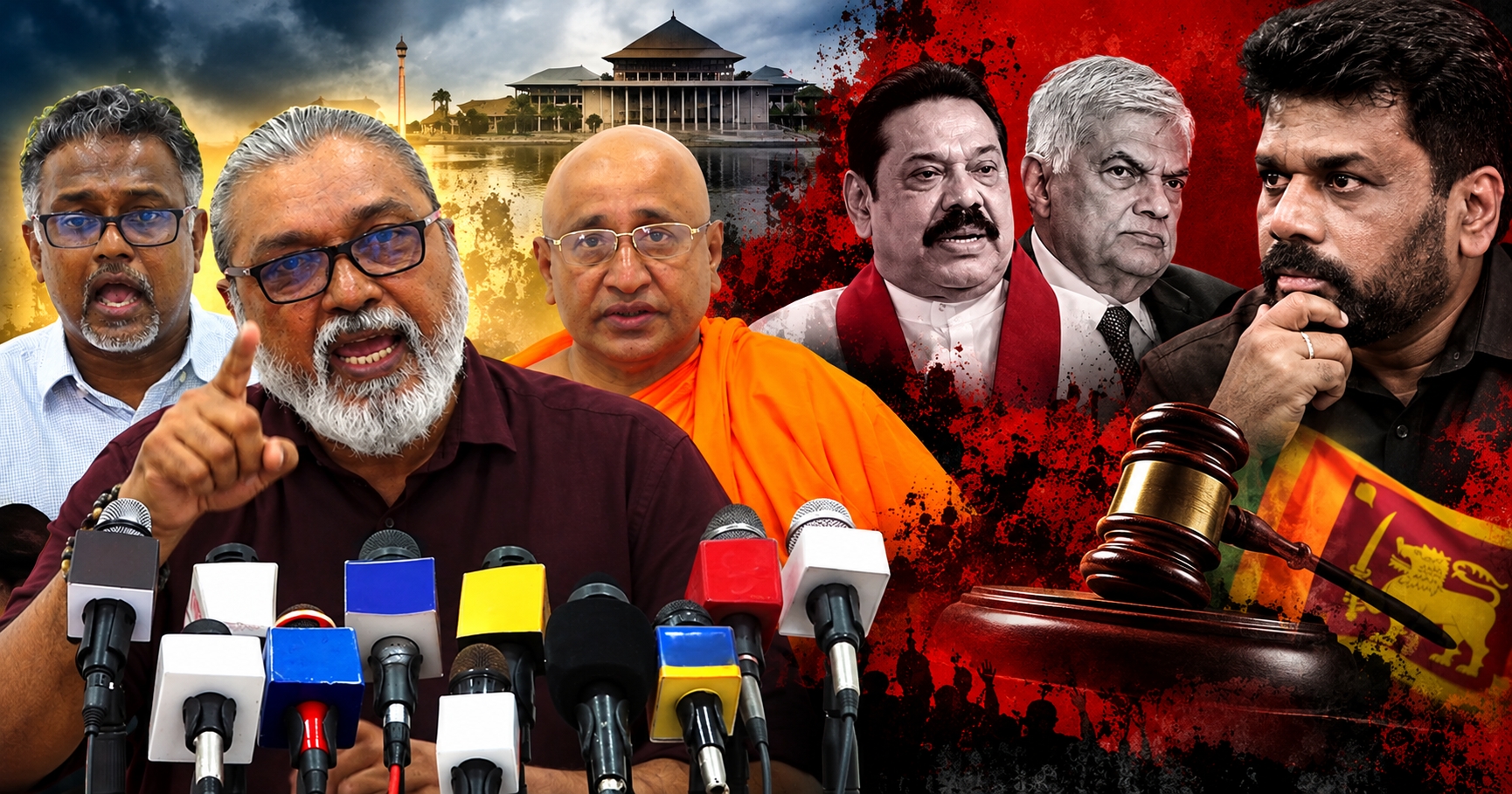
“Anura has done something even the British colonial rulers never did,” says Kelum Jayasumana, as Buddhist monks and civil society activists call for mass mobilisation over the removal of Ven. Galagoda Aththe Gnanasara Thero’s robes.
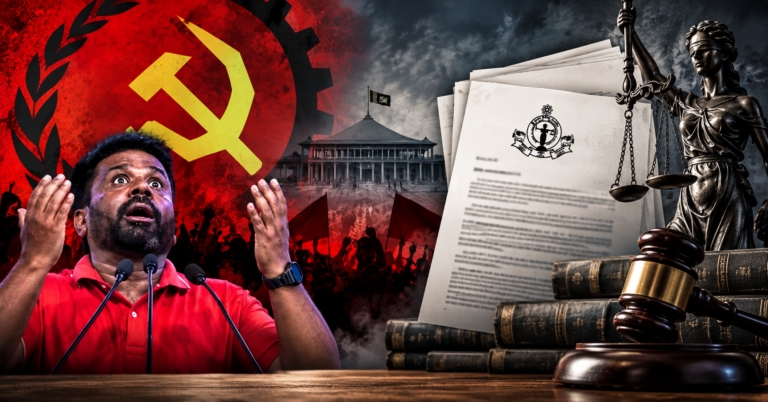
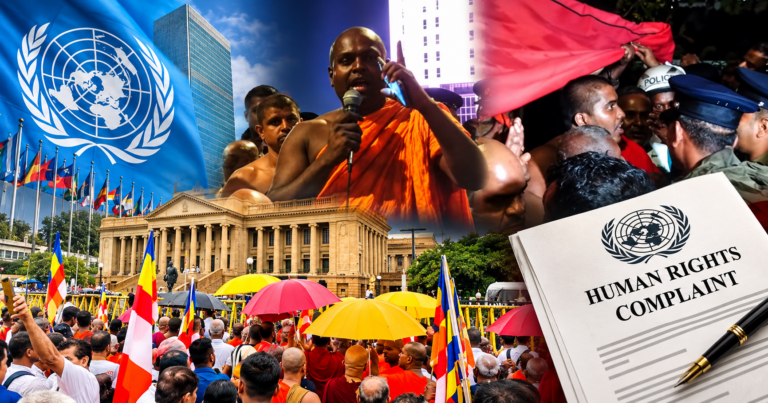
A press conference held under the theme “Justice for Ven. Galagoda Aththe Gnanasara Thero” witnessed strong criticism of President Anura Kumara Dissanayake and his government, with Buddhist monks and civil society representatives accusing the administration of undermining Buddhist traditions and selectively enforcing the law.
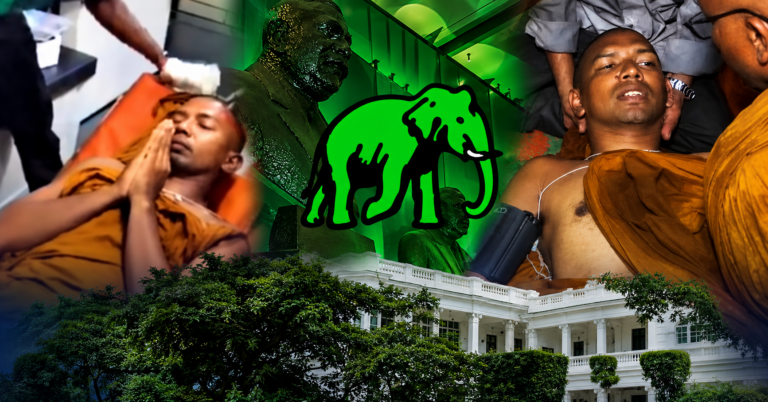
The speakers argued that the decision to remove the Buddhist robes of Ven. Galagoda Aththe Gnanasara Thero following his imprisonment was not merely an issue concerning an individual monk but a broader matter affecting the Buddhist clergy, religious traditions and the protection of Buddhism in Sri Lanka.
Among those addressing the media were Ven. Welipatha Dhammarama Thero, Secretary of the All Ceylon United National Unity Bhikkhu Front, and Sepala Amarasinghe and Kelum Jayasumana, representing the Mahajana Kendraya (People’s Centre).
“Anura Is Not Worth Even a Hair on Mahinda’s or Ranil’s Backside”
Ven. Welipatha Dhammarama Thero delivered one of the strongest criticisms of the government, alleging that its actions were contributing to the deterioration of Buddhism and threatening the future of the Buddhist Sasana.
“Today, Buddhism is deteriorating because of a group of non-religious people. This government is responsible for it. Both laypeople and members of the clergy must unite. If we remain silent, enormous damage will be done to the Buddhist Sasana and the sacred Buddhist robe,” he declared.
The monk warned that the issue should not be viewed as an isolated incident involving Ven. Gnanasara Thero.
“Tomorrow, it could happen to a young monk or even a Mahanayake Thero. What will we do then? We should not wait until the problem becomes our own. Everyone who cares about the Buddhist Sasana must come together.”
He also suggested that certain earlier actions had contributed to the present controversy.
“Remember, all these problems arose because people were testing the waters,” he said.
Turning his attention to a parliamentarian identified as Hewage, who had reportedly questioned the whereabouts of Bodu Bala Sena and Ravana Balaya, the monk launched a particularly harsh verbal attack.
“There is someone called Hewage in Parliament asking, ‘Where is Bodu Bala Sena? Where is Ravana Balaya?’ When you look at him, he is not worth even a single hair on the backside of Mahinda or Ranil.”
His remarks appeared to draw a comparison between the current political leadership and former Presidents Mahinda Rajapaksa and Ranil Wickremesinghe.
“Is the President Enforcing the Law Only Against Selected Individuals?”
Addressing the same press conference, Sepala Amarasinghe of the People’s Centre alleged that the controversy surrounding Ven. Gnanasara Thero reflected what he described as an attempt to retaliate against Buddhist culture.
“We are speaking today because we see this as an act of revenge against Buddhist culture. Why are they doing things like this? We have seen various people commenting on the decision to remove Gnanasara Thero’s robes,” he said.
Amarasinghe questioned whether President Dissanayake was applying the law equally to all citizens.
“We are beginning to wonder whether the President enforces the law only against selected individuals. The law is not being enforced against Ibrahim, who is associated with the President’s party, the JVP,” he alleged.
The allegation was made without supporting evidence or clarification of the specific legal proceedings being referenced. It remains an allegation made by the speaker rather than an independently established fact.
Amarasinghe also referred to a previous occasion when Ven. Gnanasara Thero was imprisoned, recalling that former Minister Thalatha Athukorala had reportedly stated that the monk’s robes had not been removed during that period.
He questioned why a different approach was being adopted now.
“Even the British Never Did What This Man from Thambuttegama Has Done”
Kelum Jayasumana, also representing the People’s Centre, delivered another strongly worded criticism directed at President Anura Kumara Dissanayake.
“Even the British did not do what this man from Thambuttegama has done,” Jayasumana declared.
His remarks referred to the President’s hometown and suggested that the treatment of Ven. Gnanasara Thero represented an unprecedented affront to Buddhist traditions.
Jayasumana alleged that even during British colonial rule, Buddhist monks had not been subjected to the kind of treatment now being challenged.
However, his historical comparison was presented as a political criticism, and no supporting historical evidence was provided during the remarks.
He called on members of all communities, regardless of ethnicity or religion, to participate in the planned public gathering.
“We appeal to the Sinhala people of this country, as well as people belonging to other ethnic and religious communities, to come to Kadawatha tomorrow,” he said.
Call for Public Mobilisation on October 15
The speakers urged Buddhist monks, lay devotees and members of the wider public to unite in opposition to the decision concerning Ven. Gnanasara Thero’s religious robes.
Ven. Dhammarama Thero called on people to gather in Colombo, while Jayasumana specifically invited the public to assemble in Kadawatha on October 15.
The exact time and programme of the proposed gathering were not specified in the statements provided.
The speakers maintained that the controversy should be treated as a matter of national religious significance rather than a dispute involving one individual monk.
They also warned that remaining silent could create a precedent affecting other members of the Buddhist clergy in the future.
Legal Questions Surrounding the Removal of Buddhist Robes
The controversy has also raised questions concerning the treatment of imprisoned Buddhist monks and the extent to which prison regulations should accommodate religious practices.
Sri Lanka’s Constitution, under Article 9, accords Buddhism the foremost place and places a duty on the State to protect and foster the Buddha Sasana, while also safeguarding the religious rights guaranteed by the Constitution.
However, the constitutional recognition of Buddhism does not automatically exempt Buddhist monks from criminal law, judicial sentences or applicable prison regulations.
The legal dispute over the removal of Ven. Gnanasara Thero’s robes must therefore be distinguished from the validity of the judicial sentence imposed on him.
The speakers at the press conference argued that the treatment of the monk raised broader concerns about religious dignity, equality before the law and the government’s responsibility to protect Buddhist traditions.
Their accusations against the President, the government and other individuals remain political allegations that have not been independently substantiated in the statements provided.
About the Author