
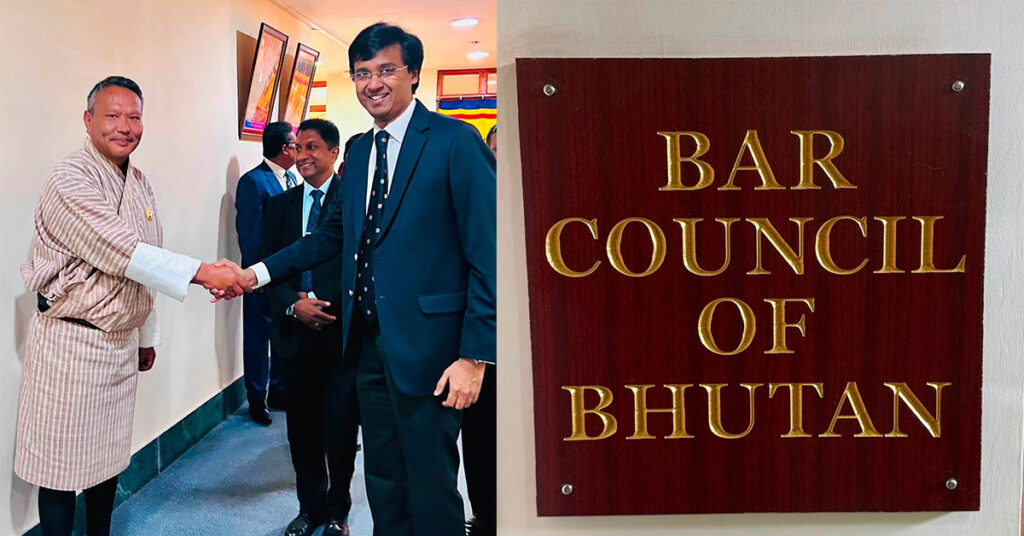
The Bar Association of Sri Lanka (BASL) and the Bar Council of Bhutan have held their first‑ever bilateral meeting in Thimphu, marking a significant step in strengthening professional and institutional ties between the two countries’ legal communities.
The meeting, held during the inaugural visit of a BASL delegation to Bhutan, resulted in a Joint Bar Statement affirming both institutions’ commitment to deepening cooperation in justice, the Rule of Law, professional integrity, judicial independence and the administration of justice.
BASL President Addresses High Court of Bhutan
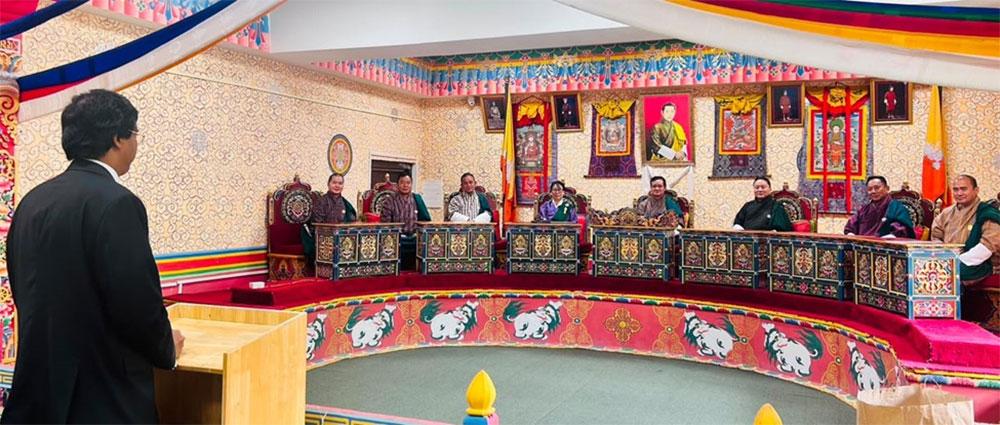
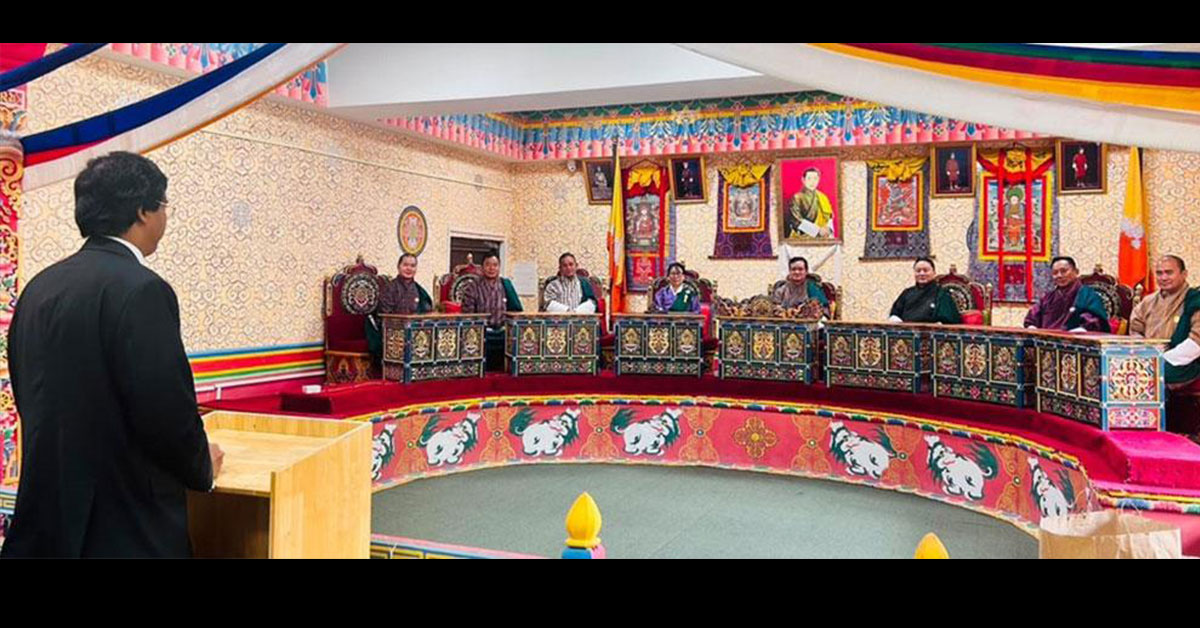
A key highlight of the visit was BASL President Rajeev Amarasuriya’s address to the High Court of Bhutan. He spoke before the Superior Bench comprising eight Justices, presided over by Chief Justice Justice Duba Drukpa.
Welcoming the Sri Lankan delegation, the Chief Justice described the visit as an honour and an opportunity to strengthen ties between the two legal professions. He emphasised that the Bench and the Bar form two branches of the same profession, united by a shared pursuit of justice and guided by mutual respect and professional integrity.
Amarasuriya, expressing gratitude for the hospitality extended by Bhutan’s judiciary, said the visit marked an important new chapter in relations between the two legal communities. He noted that although Bhutan and Sri Lanka had followed different constitutional and historical paths, both nations remained connected as South Asian partners, SAARC members and countries of the Global South with shared cultural and spiritual heritage.
Focus on Judicial Independence and People‑Centred Justice
In his remarks, Amarasuriya highlighted Bhutan’s constitutional evolution and its philosophy of Gross National Happiness, noting that the country had demonstrated that development must ultimately focus on people. He said the same principle should guide the administration of justice, stressing that courts and lawyers bear a responsibility to protect human dignity, resolve disputes peacefully, restrain arbitrary power and safeguard rights.
He underscored that judicial independence and the independence of the legal profession are not privileges for judges or lawyers, but safeguards that belong to the public.
Areas of Cooperation Identified
Amarasuriya outlined several areas where Sri Lanka and Bhutan could collaborate, including:
Legal education
Continuing professional development
Opportunities for young lawyers
Constitutional and public law
Technology and digital transformation
Court administration
Institutional exchanges
He noted that while the Himalayas and the Indian Ocean geographically separate the two nations, the values that sustain justice recognise no such boundaries.
High‑Level Engagements in Thimphu
During the visit, the BASL delegation also met:
Lyonpo Norbu Tshering, Chief Justice of the Supreme Court of Bhutan
Attorney General Sonam Tashi
Senior members of Bhutan’s judiciary and legal profession
These engagements reinforced the shared commitment to strengthening cooperation and exchanging experiences in the administration of justice.
A New Chapter in Regional Legal Collaboration
The BASL–Bhutan Bar Council meeting and the High Court engagement mark a notable milestone in regional legal collaboration. Both institutions affirmed that the visit would serve as a foundation for sustained professional exchange, institutional partnership and shared learning between the two countries’ legal communities.
About the Author