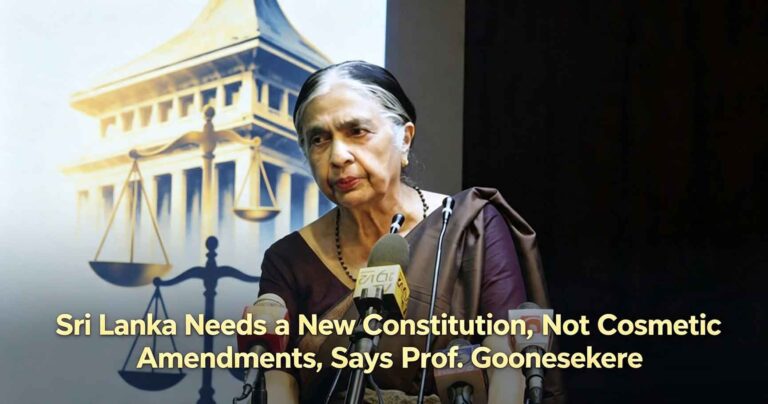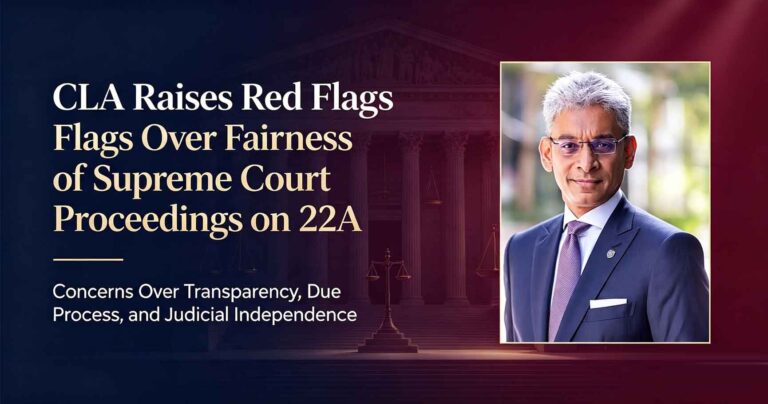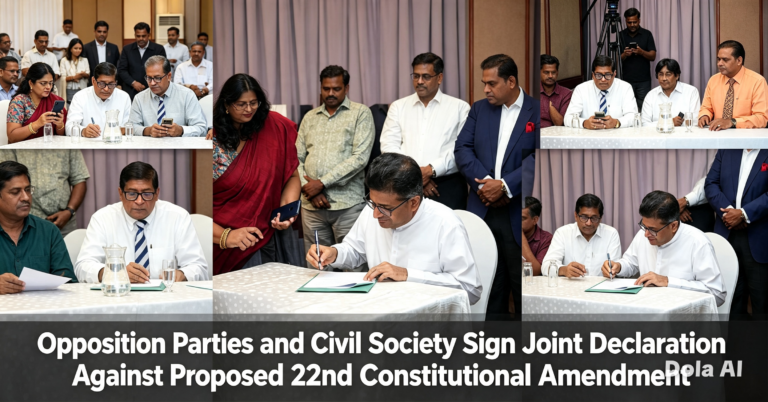

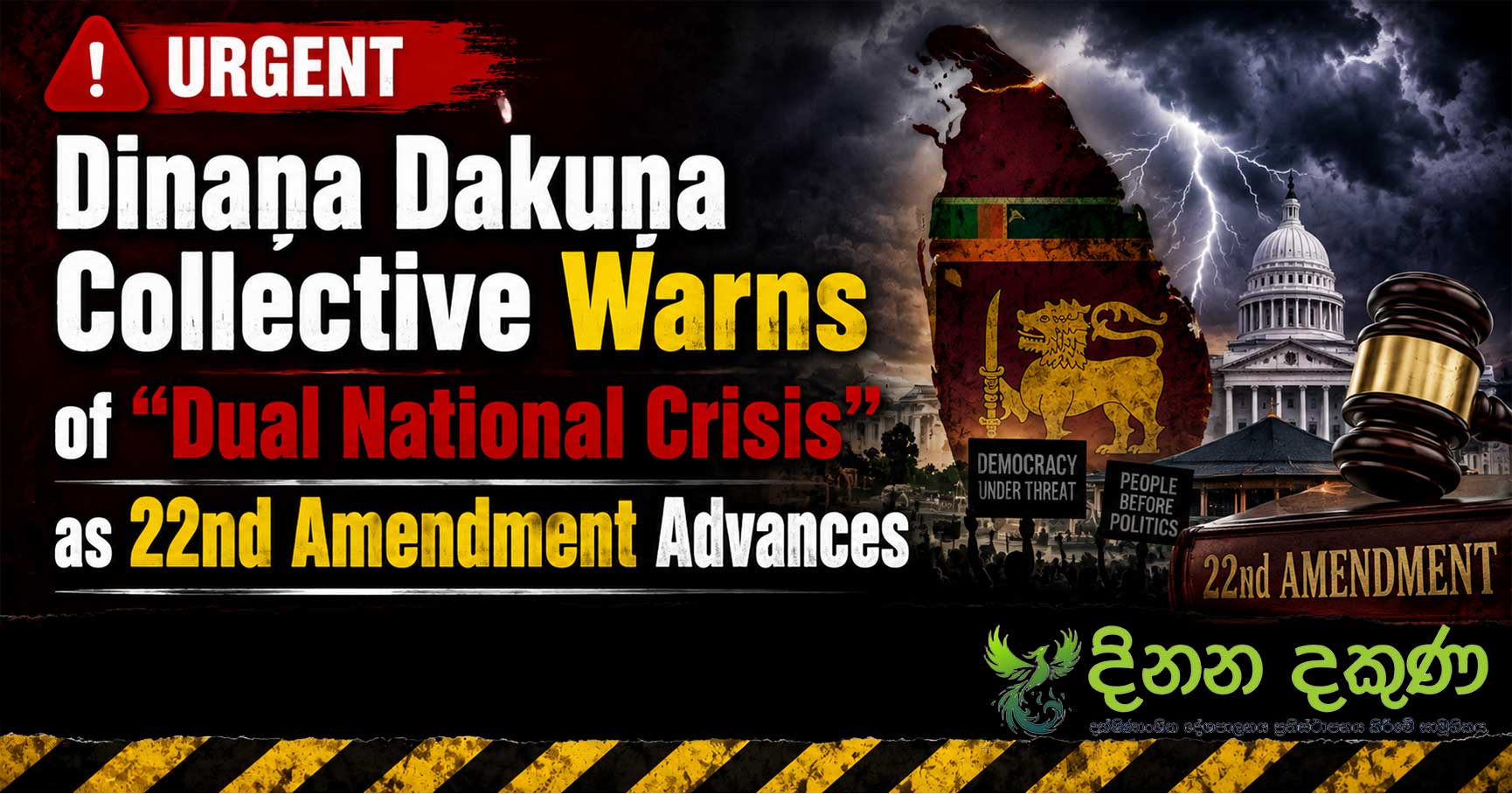
The Dinaṇa Dakuṇa Collective has issued an urgent public warning, alleging that President Anura Dissanayake’s administration is pushing ahead with the 22nd Amendment despite mounting ethical, political, and constitutional concerns. The statement, released on today, claims the amendment is being advanced with judicial backing and without meaningful public consultation.
Collective Alleges Opening for “Pelawatte Mullahs” to Capture State Power
In one of its strongest assertions yet, the Collective warns that the passage of the 22nd Amendment has created “a dangerous opening” for what it describes as the Pelawatte Mullahs to attempt a takeover of state institutions. It argues that this threat, combined with severe economic pressures, will form the most significant political challenge facing Sri Lanka in the coming year.
The group accuses the President of covertly enabling this shift through unilateral constitutional changes, stating that the country is being pushed toward “a dual disaster never before witnessed.”
Economic Crisis and Institutional Erosion
The statement sharply criticises the Malima administration’s economic management, citing falling household incomes, declining purchasing power, and widespread financial hardship. According to the Collective, these conditions have forced ordinary citizens into a daily struggle for survival.
Against this backdrop, the group argues that the 22nd Amendment dismantles “the final institutional safeguards” protecting citizen sovereignty. It warns that weakening judicial independence during an economic crisis will leave citizens vulnerable to arbitrary executive actions and anti‑people policies.
Concerns Over Supreme Court’s Handling of the Amendment
The Collective also expresses alarm over the Supreme Court’s refusal to convene a full bench to review the amendment. It claims this decision has cleared the path for the bill to be passed with a two‑thirds majority in Parliament, drawing parallels to the controversial 18th and 20th Amendments enacted under previous administrations.
Threat to Separation of Powers and Democratic Space
By extending judicial tenure and altering constitutional provisions, the Collective argues that political authorities are increasing their ability to exert undue influence over the judiciary. It describes this as a breakdown of the separation of powers, warning that citizens will be left “completely unprotected” before an Executive‑aligned judiciary.
The statement further cautions that centralising power across all branches of government will shrink democratic space for trade unions, civil society organisations, journalists, and activists. It predicts that rights to protest and organise peacefully will be systematically eroded.
Call for Nationwide Resistance
The Dinaṇa Dakuṇa Collective concludes by urging the legal community, trade unions, civil society groups, and citizens to “stand unconditionally for the independence of state institutions” and resist what it describes as the gradual erosion of representative democracy.
The statement was issued by the Collective’s Leadership Council and Executive Committee.
About the Author