
Rights activists in Sri Lanka have accused state authorities of attempting to shield an influential Buddhist monk charged with repeatedly raping a minor, warning that the slow pace of prosecution reflects deep institutional bias and impunity for powerful figures.
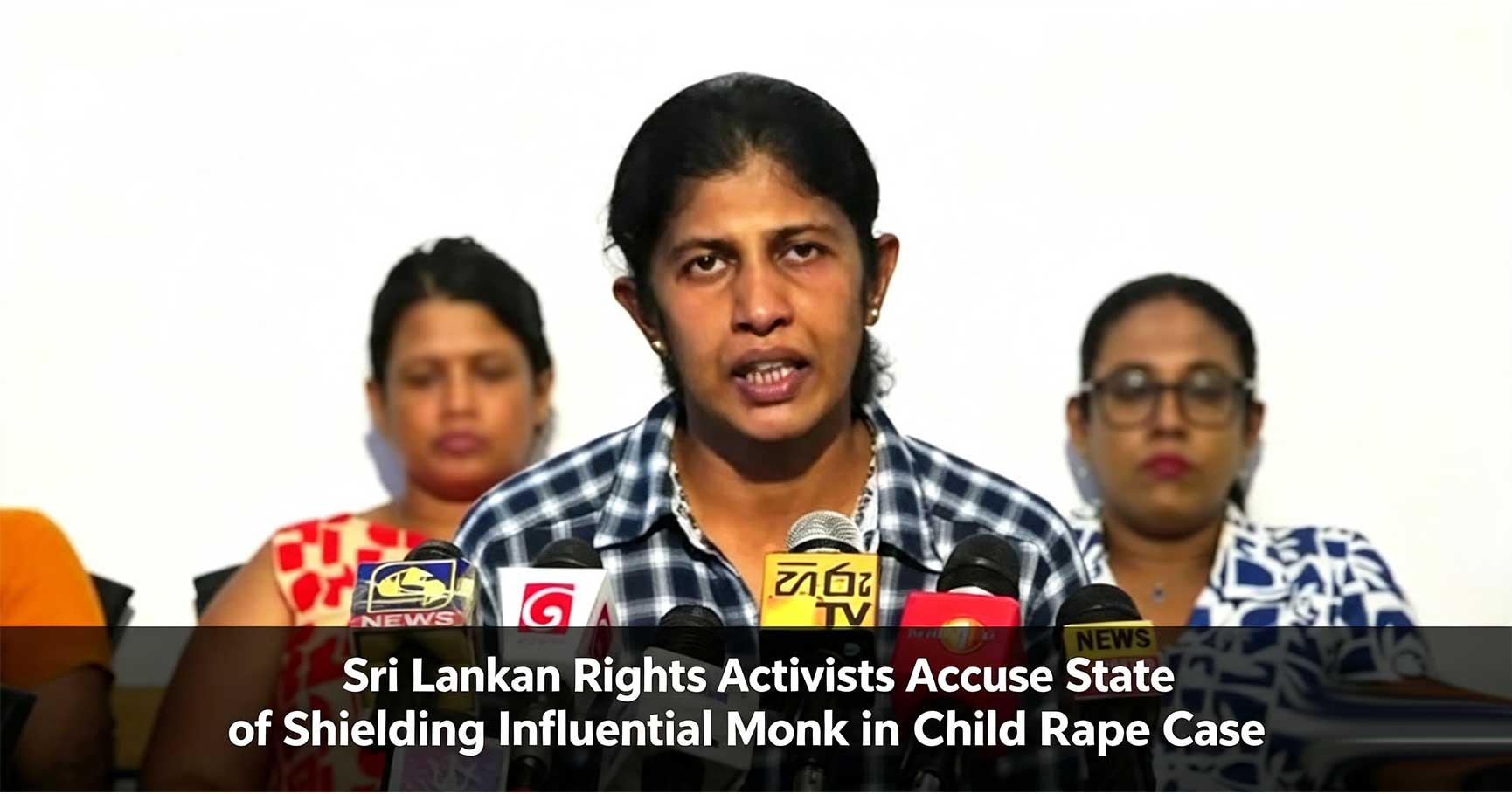
At a press conference in Colombo on Aug. 31, human rights and child protection campaigners condemned what they described as “deliberate delaying tactics” in the case against Pallegama Hemarathana Thero, a 71‑year‑old monk arrested on May 9 for allegedly abusing a girl multiple times since 2022. The victim was reportedly 15 when the abuse began.
Hemarathana, formerly the chief Buddhist prelate of the Nuwara Kalaviya region and custodian of eight major pilgrimage sites in Anuradhapura, was suspended from his positions soon after the allegations surfaced. He was initially remanded but later released on bail.
Special Privileges and Delayed Justice
Activists expressed outrage over reports that the monk arrived at the Anuradhapura High Court on June 16 in a luxury vehicle and was allowed to enter through the judges’ special entrance, bypassing routine security checks faced by the public.
The Chief Magistrate has adjourned the case until Jan. 8, 2027, pending advice from the Attorney General—an unusually long delay that rights groups say undermines justice for the victim.
Chanu Nimesha of the Socialist Party of Sri Lanka said the case exposes how the justice system bends when influential individuals are accused.
“A person’s rank, position, religious background, or political power should never shield them from accountability,” he said. “Yet Hemarathana Thero received special privileges that no ordinary suspect would ever be granted.”
Nimesha urged authorities to ensure transparent, independent investigations and called for a dedicated judicial process for cases involving crimes against women and children.
A Pattern of Protection for Powerful Abusers
Writer and activist Jeana De Zoysa said the differential treatment of high‑profile suspects sends a dangerous message.
“When abuse cases involving powerful people are handled gently, society learns that abusers—not children—will be protected,” she said.
Counsellor Sarath Weerawansa from Kurunegala said Sri Lanka’s child abuse crisis is rooted in institutional failures, fear of religious authority, and entrenched impunity.
A Wider Crisis of Abuse in Religious Institutions
The Hemarathana case is the latest in a series of scandals involving Buddhist clergy. According to a May 28 report by the Organized Crime and Corruption Reporting Project (OCCRP), 285 monks have been accused of abusing children over the past three years, with only 30 formally charged. The figures, sourced from the National Child Protection Authority, show that 70 percent of cases involved sexual offenses.
Sri Lanka recorded 9,673 child abuse complaints in 2023, over 15,000 in 2024, and 10,455 in 2025. In the first six months of 2026 alone, 5,523 complaints were filed—numbers activists say reflect a deepening crisis.
Calls for Accountability
Rights defenders say the Hemarathana case will test whether Sri Lanka’s justice system can act independently of religious and political influence.
“We are facing a national emergency in child protection,” Weerawansa said. “Unless the state acts decisively, more children will suffer, and more powerful abusers will walk free.”
About the Author